





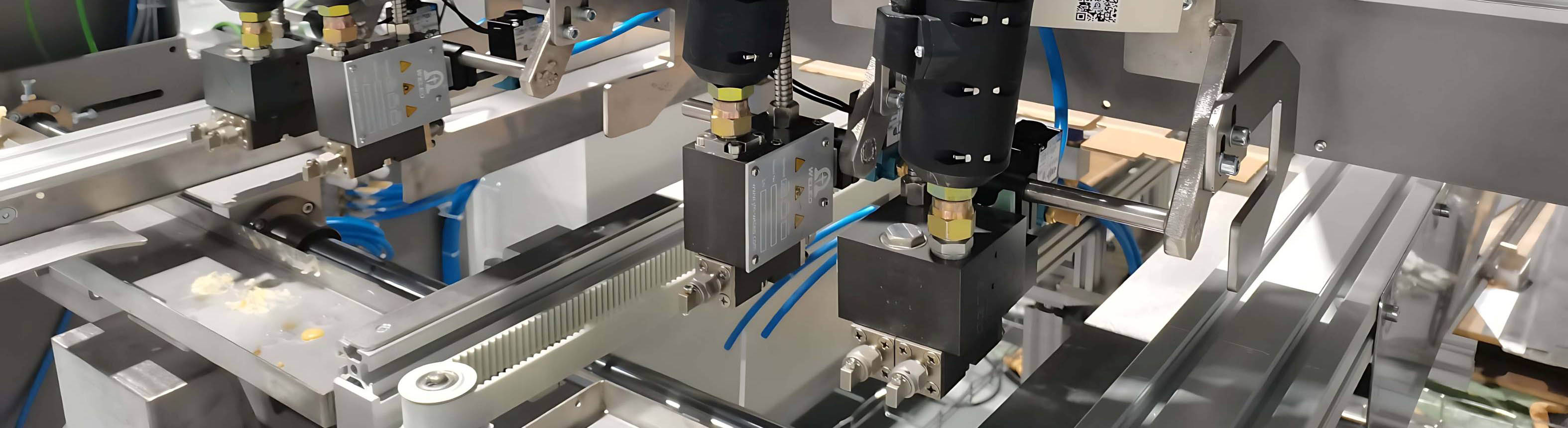
PLC integration allows an adhesive system to work together with an automatic production line. Instead of relying only on manual operation, the glue equipment can receive start signals, control glue output timing, match product movement, and respond to production speed.
-
2026-06-05
-
2026-06-04Reliable dispensing means placing the required adhesive amount in the correct position during every production cycle. Performance can drift after temperature changes, line acceleration, or nozzle contamination, so accuracy must be evaluated across the full delivery path.
-
2026-06-04Proper adhesive pump maintenance system planning can protect glue output stability and reduce unexpected downtime. The pump is the core part of many hot melt and cold glue systems. When it works well, adhesive flows smoothly, pressure remains stable, and the final bonding result stays consistent.
-
2026-06-03Industrial hot melt glue machine refers to equipment that melts solid hot melt adhesive and delivers it to hoses, guns, nozzles, rollers, or spray heads for bonding, coating, sealing, laminating, and assembly.
-
2026-06-03Stable maintenance cost starts before the glue system enters production. Many factories only check the purchase price, but the real cost often comes from blocked nozzles, unstable temperature, worn seals, delayed cleaning, and emergency downtime.
-
2026-05-30Stable temperature control is one of the most important factors in a glue system. It affects adhesive viscosity, flow speed, pump pressure, nozzle condition, open time, bonding strength, and maintenance frequency. When temperature control is poor, factories may see overflow, stringing, weak bonding, carbon buildup, or frequent nozzle clogging.
-
2026-05-30Modern manufacturing increasingly relies on controlled adhesive placement to achieve consistent bonding quality, reduced waste, and stable production efficiency. A precision system is designed to manage adhesive flow with strict control over temperature, pressure, timing, and volume, ensuring each drop or bead is delivered exactly as required by the process.
-
2026-05-30Factory efficiency is often discussed through machine speed, labor cost, and production capacity. Adhesive application is sometimes treated as a small process, but unstable glue control can slow the whole line.
-
2026-05-30An industrial adhesive pump system moves adhesive from the supply unit to the application point with controlled pressure, flow, and timing. It may look like only one part of a glue machine, but the pump system directly affects glue amount, bead stability, spray pattern, overflow control, and bonding repeatability.
-
2026-05-30Reliable adhesive dispensing equipment selection starts with one question: what problem must the glue system solve on the production line? Some factories need faster packaging output, some need cleaner edge bonding, some need stable PUR application, and some need a flexible glue system for different product sizes.
-
2026-05-30Adhesive system failure usually does not happen suddenly. Most problems start with small warning signs: a glue line becomes thinner, a nozzle clogs more often, the tank smells burnt, the pump pressure changes, or operators need to adjust the machine repeatedly during one shift.
-
2026-05-30Pump selection is not a small equipment detail. It decides whether the adhesive can be delivered smoothly, whether the glue amount remains stable, and whether the production line can keep the same bonding result during long operation. For hot melt, PUR, and cold glue applications, the pump must match adhesive viscosity, output demand, pressure range, line speed, and application pattern.