





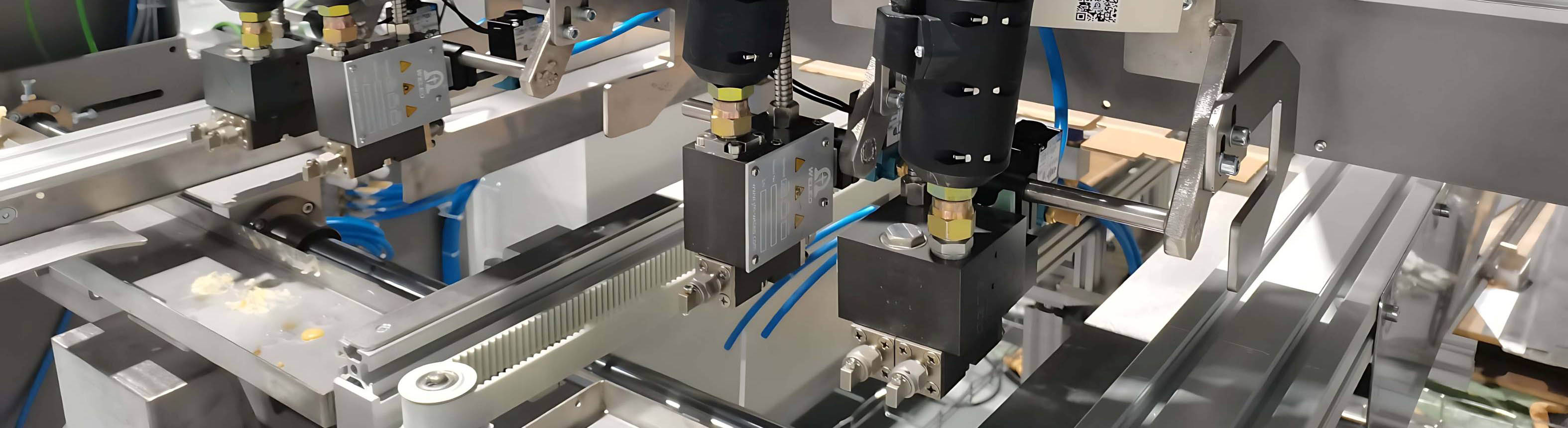
What Are Common Adhesive System Failures?
Adhesive system failure usually does not happen suddenly. Most problems start with small warning signs: a glue line becomes thinner, a nozzle clogs more often, the tank smells burnt, the pump pressure changes, or operators need to adjust the machine repeatedly during one shift.
For automated production, these small changes can create rejected products, cleaning downtime, wasted adhesive, and unstable delivery schedules. A clear adhesive system failure analysis helps factories find the real cause instead of replacing parts randomly.
Table of Contents
- Failure Type One: No Glue Or Weak Glue Output
- Failure Type Two: Carbonization Inside The Hot Melt System
- Failure Type Three: Temperature Zone Faults
- Failure Type Four: Pump Pressure Instability
- Failure Type Five: Nozzle Clogging
- Failure Type Six: Poor Bonding After Application
- Failure Type Seven: Control Signal Problems
- How WELEO Helps Reduce Adhesive System Failures
- Make Failure Analysis Part Of Daily Production
Failure Type One: No Glue Or Weak Glue Output
When the applicator does not release enough adhesive, many operators first suspect the nozzle. That may be correct, but the problem can also come from the filter, pump, temperature setting, hose blockage, or adhesive viscosity.
A no-glue condition may be caused by:
Blocked filter
Low tank temperature
Pump wear
Air pressure instability
Clogged nozzle
Empty or bridging adhesive in the tank
Sensor signal failure
Hose heating fault
The fastest way to troubleshoot is to check from the tank to the nozzle. If glue is melted correctly in the tank but pressure is low after the filter, the filter may be blocked. If pressure is normal but no glue reaches the product, the applicator or nozzle may be clogged. If the control signal is missing, the mechanical system may be fine but the valve never opens at the right time.
Failure Type Two: Carbonization Inside The Hot Melt System
Carbon buildup is one of the most common industrial glue equipment problems. It often comes from long heating time, excessive temperature, poor tank cleaning, or adhesive staying in dead corners.
Carbon particles may move through the system and create several new problems:
Blocked filters
Nozzle clogging
Uneven glue output
Dark glue color
Burnt smell
Shorter maintenance cycle
Pump wear
Many hot melt adhesives are designed to work within a recommended temperature range. When the system keeps adhesive overheated for long periods, thermal degradation becomes more likely. The problem may become worse during frequent production pauses because glue remains heated without enough circulation.
A practical prevention method is to reduce unnecessary high-temperature holding time, clean the tank regularly, and check filter condition before blockage affects production.
Failure Type Three: Temperature Zone Faults
A hot melt system may show the correct tank temperature but still apply unstable glue. This happens when another heating zone is not working properly.
The Heated Hose may lose temperature. The applicator may heat unevenly. The nozzle may overheat. A sensor may display incorrect data. These issues directly affect viscosity and glue pattern.
Temperature zone faults often appear as:
| Symptom | Possible Cause | Production Result |
|---|---|---|
| Glue stringing | Nozzle too cool or adhesive too viscous | Dirty product edge |
| Glue overflow | Nozzle too hot or viscosity too low | Excess adhesive waste |
| Broken glue line | Hose temperature drop | Weak bonding |
| Frequent clogging | Carbon particles or overheated glue | Downtime increase |
| Slow start-up | Weak heating recovery | Delayed production |
A reliable adhesive equipment failure causes review should include each heating zone, not only the tank.
Failure Type Four: Pump Pressure Instability
Pressure instability can create both too much glue and too little glue. The output may look normal at low speed but become unstable when the line accelerates.
Possible causes include pump wear, unsuitable pump type, air supply fluctuation, blocked filter, poor adhesive melting, or incorrect pressure setting.
When pressure is unstable, the glue pattern may show heavy start points, thin middle areas, uneven spray, or delayed output. This is especially serious in packaging, labeling, filter assembly, and hygiene product production because the glue position must follow product movement accurately.
The solution should begin with data. Record pressure before and after the filter, observe pressure during machine start-stop, and compare output at different line speeds. Random pressure adjustment may hide the symptom but will not remove the root cause.
Failure Type Five: Nozzle Clogging
Nozzle clogging is easy to see, but the reason behind it is not always inside the nozzle. Clogging can be caused by contaminated adhesive, carbon particles, poor filtration, incorrect temperature, or long idle time.
Factories often clean the nozzle again and again, but the problem returns because the system upstream is still dirty.
To reduce nozzle clogging:
Use suitable filtration
Avoid overheating adhesive
Clean the tank before carbon buildup becomes heavy
Keep adhesive storage clean
Reduce dust entry during refilling
Check hose and applicator heating stability
Replace worn nozzle parts on schedule
Nozzle maintenance should be part of system management, not only an emergency repair action.
Failure Type Six: Poor Bonding After Application
Sometimes the glue is applied cleanly, but the bonding result is still weak. This kind of failure may come from adhesive open time, surface contamination, material coating, pressure after bonding, or wrong glue amount.
For hot melt adhesives, open time and set time are key factors. If the adhesive cools before the parts are pressed together, bonding strength becomes weaker. If the glue stays too fluid for too long, the product may shift before final setting.
Poor bonding may also come from substrate problems. Dust, oil, moisture, coating, or low surface energy can reduce adhesion. In this case, increasing glue amount may not solve the issue.
Failure Type Seven: Control Signal Problems
Modern adhesive systems often connect with PLCs, sensors, encoders, and production signals. If the signal timing is wrong, the glue may be applied at the wrong position even when the adhesive equipment itself works correctly.
Control signal failure can create:
Missing glue
Glue too early
Glue too late
Longer glue tail
Random output
Inconsistent spacing
This is common after line speed changes, product size changes, sensor replacement, or machine maintenance. The glue system should be checked together with the main production line.
How WELEO Helps Reduce Adhesive System Failures
WELEO supplies hot melt adhesive systems, PUR reactive hot melt equipment, cold glue systems, heated hoses, nozzles, filters, and related application components. For common glue system troubleshooting, this complete equipment range helps production teams examine the full process from melting to application.
A failure may come from heating, pumping, filtration, control, or application parts. When each part is matched correctly, the system becomes easier to maintain and less sensitive to small process changes.
For factories planning equipment upgrades, the focus should be on stability, maintenance access, and accurate control rather than only machine size.
Make Failure Analysis Part Of Daily Production
Adhesive system failure analysis works best when operators record real production data. Temperature, pressure, glue type, nozzle size, line speed, filter change date, and failure position should be written down before changing settings.
This habit helps identify patterns. If clogging happens after long heating pauses, carbonization may be the key issue. If overflow appears only after speed changes, timing or pressure may be the cause. If weak bonding appears on one material only, the substrate may need testing.
A stable adhesive process depends on regular inspection, correct system matching, and disciplined troubleshooting. When the full adhesive path is managed properly, factories can reduce downtime, improve bonding consistency, and keep automated production running with fewer interruptions.