





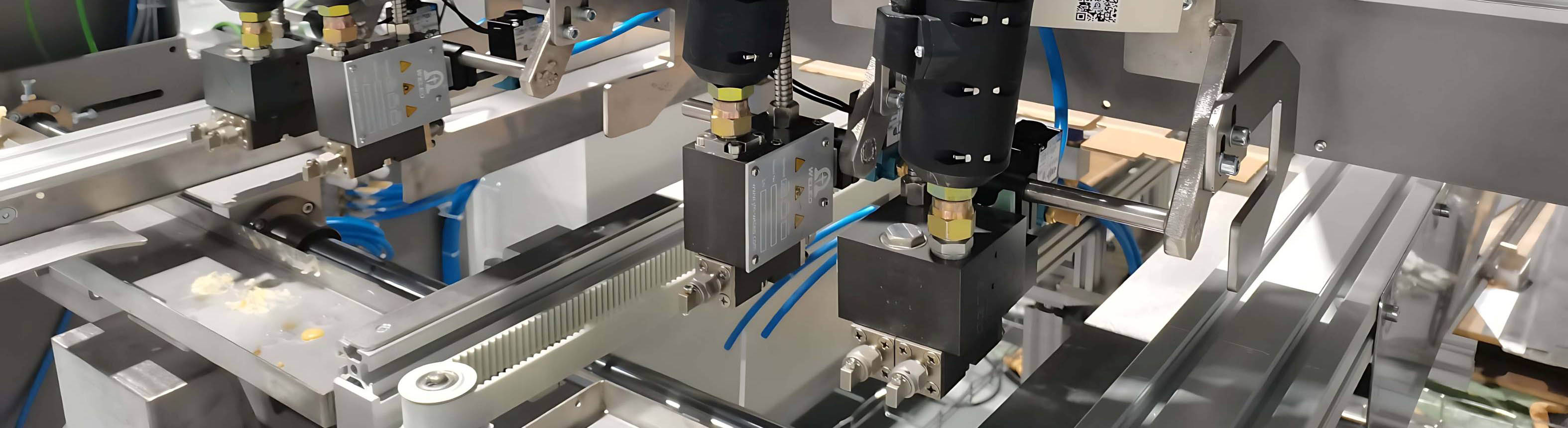
What Is a Pur Hot Melt System?
Moisture-reactive hot melt technology is used when bonds must remain strong under heat, stress, or long-term use. A PUR hot melt adhesive system processes polyurethane reactive adhesives that cure in two stages: fast initial set after cooling, followed by a chemical reaction with ambient moisture that builds final strength over time. This dual mechanism explains why PUR is chosen for demanding products such as laminated panels, edge banding, automotive interiors, and high-end packaging.
Industry figures from 2024 show that reactive hot melts are among the fastest-growing adhesive segments, driven by the need for higher durability and resistance to temperature and humidity. Understanding what is PUR adhesive system helps clarify how these systems achieve both speed and long-term performance.
Table of Contents
How PUR systems operate on the line
Unlike standard hot melts, PUR materials must be handled in a closed and controlled environment. The adhesive is supplied in sealed cartridges or drums, melted under controlled conditions, then delivered to the applicator while limiting exposure to moisture.
A typical pur glue application system follows a sequence:
Sealed feeding of adhesive into the melter
Controlled melting to a defined temperature range
Pressurized delivery through heated lines
Precise application via slot die, bead, or spray
Post-application curing through ambient humidity
This process makes PUR systems both efficient and sensitive to environmental control.
Key components and their roles
A well-designed system integrates several modules that work together to protect the adhesive and ensure stable output.
Closed melting unit
The melting tank prevents moisture from entering the adhesive during heating. This is essential because premature reaction can cause solidification inside the system.
Metering and pumping section
Accurate delivery depends on stable pressure and flow. The pump must handle increasing viscosity as the adhesive begins to react over time.
Heated transfer lines
Uniform heating keeps the adhesive in a usable state during transport. Temperature consistency is critical for maintaining flow behavior.
Application head
The applicator determines how adhesive is deposited. Different heads are used depending on the bonding method and product design.
These elements together form a complete reactive adhesive application system capable of delivering precise and reliable bonding.
Why PUR systems are different from standard hot melt
PUR adhesives behave differently from conventional thermoplastic hot melts. The initial bond forms quickly after cooling, but full strength develops through chemical curing.
| Property | PUR Hot Melt | Standard Hot Melt |
|---|---|---|
| Bonding mechanism | Cooling and chemical reaction | Cooling only |
| Final strength | High and durable | Moderate |
| Resistance to heat and moisture | Strong | Limited |
| Processing sensitivity | High | Lower |
This difference makes PUR suitable for applications where long-term durability is required.
Advantages of PUR adhesive systems
PUR systems offer several benefits that make them valuable in advanced manufacturing.
Strong and durable bonding
The chemical curing process creates bonds that resist heat, moisture, and mechanical stress.
Improved product quality
Uniform application and strong adhesion enhance product performance and appearance.
Reduced material usage
High bonding strength allows thinner adhesive layers, which can lower overall consumption.
Compatibility with automation
PUR systems are designed to integrate with automated production lines, supporting consistent output.
Operational challenges and control points
While PUR systems provide strong performance, they require careful handling.
Moisture exposure must be minimized before application. Temperature control must remain stable throughout the process. Cleaning and maintenance must be managed carefully to avoid cured adhesive buildup inside the system.
These factors make proper system design and operation essential for reliable performance.
WELEO’s approach to PUR systems
WELEO develops PUR solutions that focus on stability, protection, and efficiency. Its systems use sealed feeding structures to prevent moisture contamination and maintain adhesive quality during processing.
Advanced temperature control ensures consistent viscosity, while optimized internal flow paths reduce the risk of premature curing. Integrated control modules support precise application, helping maintain stable output in different production conditions.
By combining these features, WELEO delivers reliable PUR glue equipment designed for modern manufacturing needs.
Typical applications across industries
PUR systems are widely used in sectors where bonding performance is critical.
They are applied in woodworking for panel lamination and edge banding, in packaging for high-strength sealing, and in automotive manufacturing for interior assembly. Their ability to maintain bond strength under challenging conditions makes them suitable for long-term use products.
Conclusion
A PUR hot melt system is a specialized adhesive solution that combines fast processing with long-term durability. Its reactive curing mechanism sets it apart from traditional hot melt technologies.
Understanding how these systems work and how to control their operation helps manufacturers achieve consistent and reliable bonding results. WELEO provides solutions that support stable processing and efficient application, enabling production lines to meet higher performance standards.