





How To Choose Hot Melt Equipment For Labeling Applications?
Labeling equipment must apply the correct adhesive quantity without wrinkling, staining, shifting, or damaging the label. Selection depends on label material, container surface, production speed, adhesive open time, deposit pattern, and the conditions the finished product will face.
Table of Contents
Identify the Labeling Process
Wraparound labels, spot-attached labels, paper labels, film labels, and container assembly processes do not use the same glue pattern. Define whether adhesive is required at the leading edge, trailing edge, full surface, or selected points.
The label may contact glass, metal, plastic, coated board, or another film. Surface energy, condensation, dust, container temperature, and label tension should be included in bond trials.
Match Adhesive Behavior With the Substrate
The adhesive must wet the label and container within the available contact time. Paper can absorb or tolerate heat differently from thin films. Excessively hot or heavy application may distort lightweight labels, while insufficient glue may cause edge lifting.
A hot melt system for labeling should maintain the approved viscosity without overheating adhesive during long stops. Confirm recommended temperature, open time, heat sensitivity, and storage conditions with the adhesive supplier.
Select the Deposit Pattern
Dots or short beads can reduce glue consumption for leading- and trailing-edge attachment. Spray or controlled coating may be used when broader coverage is required. The pattern should support the bond without visible squeeze-out.
| Labeling condition | Equipment priority |
|---|---|
| High-speed container line | Fast trigger and clean cut-off |
| Thin film label | Low, controlled glue weight |
| Several label sizes | Stored patterns and quick recipe change |
| Cold or wet container | Verified adhesive and surface preparation |
| Variable conveyor speed | Encoder or speed-linked dispensing |
| Multiple labeling stations | Adequate pump and heating capacity |
Coordinate Timing With Container Movement
Sensor position, conveyor speed, product spacing, and applicator response determine where the glue reaches the label. Time-based control may shift the deposit when speed changes. Encoder-based distance control can maintain a more stable position.
A label adhesive dispensing system should also handle missing products or labels without releasing unwanted glue. Interlocks between the labeler, conveyor, and adhesive controller help keep the machine clean.
Size the Melter and Pump
Calculate adhesive weight per label, labels per minute, simultaneous applicators, and peak duty cycle. The melter must recover after refilling, while the pump must supply short, repeated deposits without unstable pressure.
Oversized tanks can increase residence time, while insufficient melt rate can lower temperature during full-speed operation. Pump type should reflect required accuracy, flow, and speed-following needs.
Verify Label Appearance and Bonding
Testing should record deposited weight, glue position, label alignment, cut-off quality, and visible distortion. Bond strength should then be checked after the adhesive has cooled and after the labeled product has experienced its expected storage conditions.
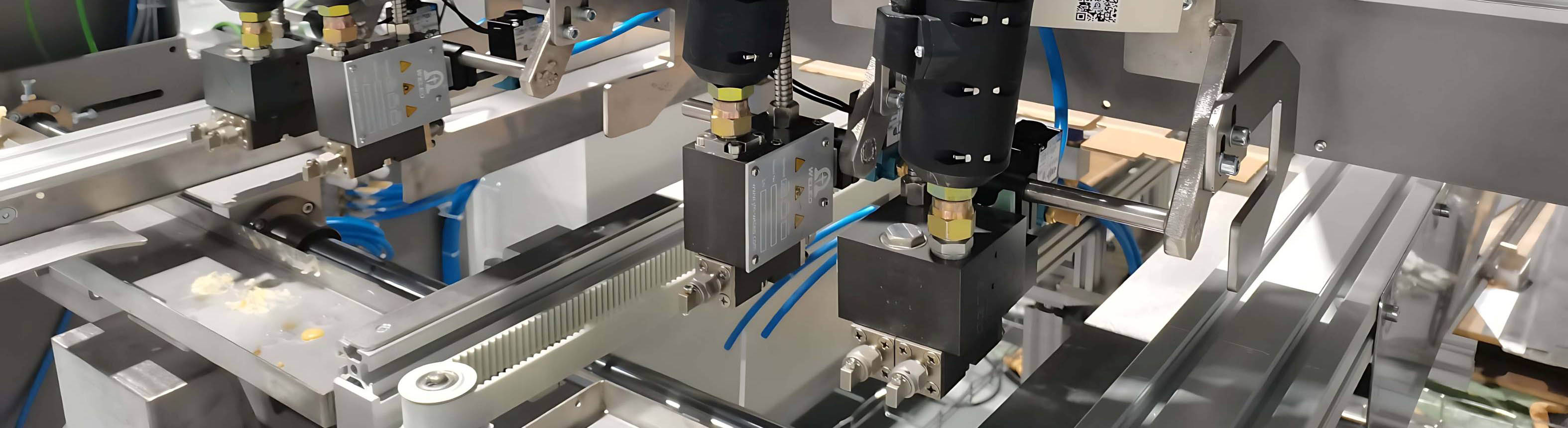
WELEO configures hot melt labeling equipment around actual labels, containers, adhesive data, production speed, and control signals. Testing deposit weight, position, cut-off, label appearance, and finished bond strength helps establish a labeling process that remains clean and repeatable across production runs.