





What Is A Multi Nozzle Glue Dispensing System?
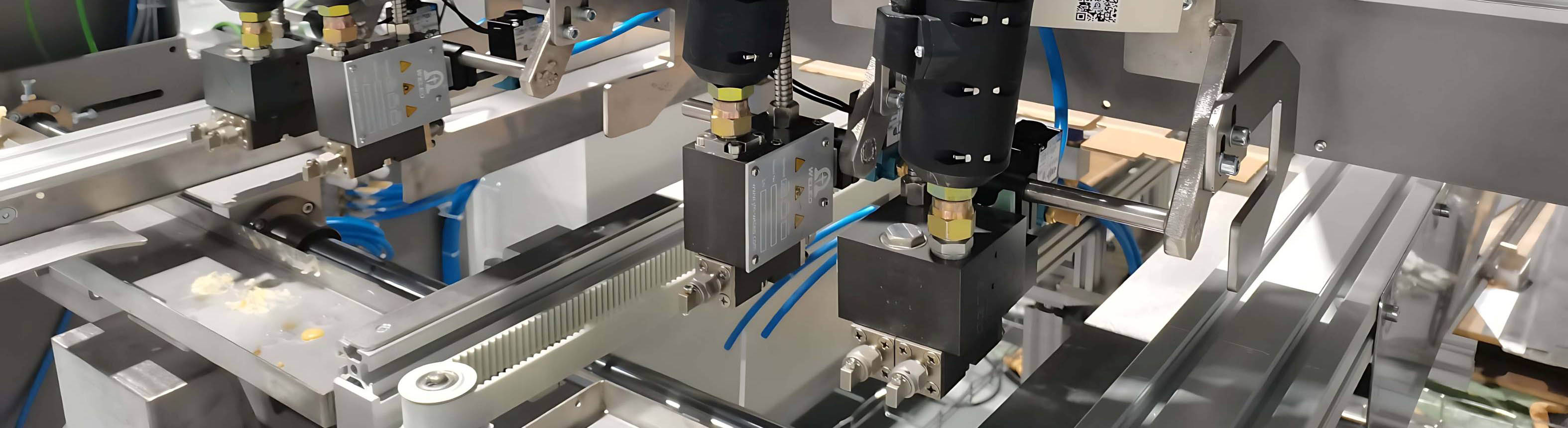
A multi-nozzle system delivers adhesive through two or more outlets to create several beads, dots, spray zones, or coating tracks within one production cycle. The outlets may operate together, in groups, or independently depending on product geometry, line speed, pump capacity, and control requirements.
| Configuration | Typical purpose | Main control concern |
|---|---|---|
| Several holes in one nozzle | Create parallel beads or distributed dots | Equal orifice condition |
| Several guns on one pump | Cover multiple positions or lanes | Balanced pressure and flow |
| Independent pump channels | Meter different zones separately | Channel calibration |
| Mixed nozzle patterns | Apply different bead or spray forms | Timing and recipe control |
| Multiple robot applicators | Reach complex product areas | Motion synchronization |
Table of Contents
Distribution Must Be Designed, Not Assumed
Adding outlets divides the available adhesive flow. Hose length, manifold geometry, filter condition, nozzle diameter, and pressure loss affect how much material reaches each point. Identical nozzles can still produce different output when their delivery paths are not balanced.
An adhesive multi nozzle system should be sized from the total simultaneous demand. The pump must supply every active outlet without excessive pressure, temperature loss, or slow recovery.
Decide Whether Outlets Work Together
Some products require every nozzle to open at the same moment. Others need separate timing for different package flaps, substrate widths, or assembly positions. Define which outlets are always active, which follow recipes, and which must be disabled during narrower production runs.
A multiple nozzle dispensing system may use one trigger for grouped application or separate valve controls for independent zones. More control channels increase flexibility but also require additional wiring, signals, and fault monitoring.
Balance Adhesive Across the Nozzles
Equal output depends on more than matching orifice size. Keep hoses similar in length where practical, use suitable manifolds, maintain consistent heating, and avoid unnecessary restrictions. When paths cannot be equal, individual metering or calibrated compensation may be required.
Channel testing should be performed at minimum, normal, and maximum production demand. Pressure balance that appears acceptable at low speed may change when all valves open simultaneously.
Match Nozzle Type to the Deposit
Single- and multi-orifice bead nozzles create defined lines or dots. Angled and Extended Nozzles improve access around machine structures. Swirl or spray modules distribute material over a larger area.
The multi nozzle dispensing system should use the fewest outlets that can meet coverage and bond requirements. Unnecessary nozzles increase cleaning points, trigger complexity, and opportunities for leakage or blockage.
Integrate Timing With Product Movement
Product sensors, encoder signals, and valve response determine deposit position. For industrial glue distribution across several lanes, the controller should identify whether a fault affects one nozzle, one group, or the entire line.
Independent lane control can prevent one blocked outlet from stopping unaffected stations. The decision depends on whether products remain traceable and whether the production line can reject items from a single lane.
Verify Each Outlet Separately
Acceptance testing should record glue weight, bead position, pattern width, cut-off response, temperature, and pressure for every channel. Measuring only total pump output can hide excessive application at one outlet and insufficient adhesive at another.
WELEO configures each multi nozzle glue system around total flow, individual deposit weight, nozzle geometry, channel timing, and automation signals. Balancing the supply and verifying every outlet independently helps achieve repeatable bonding without hiding channel variation inside one total-flow measurement.