





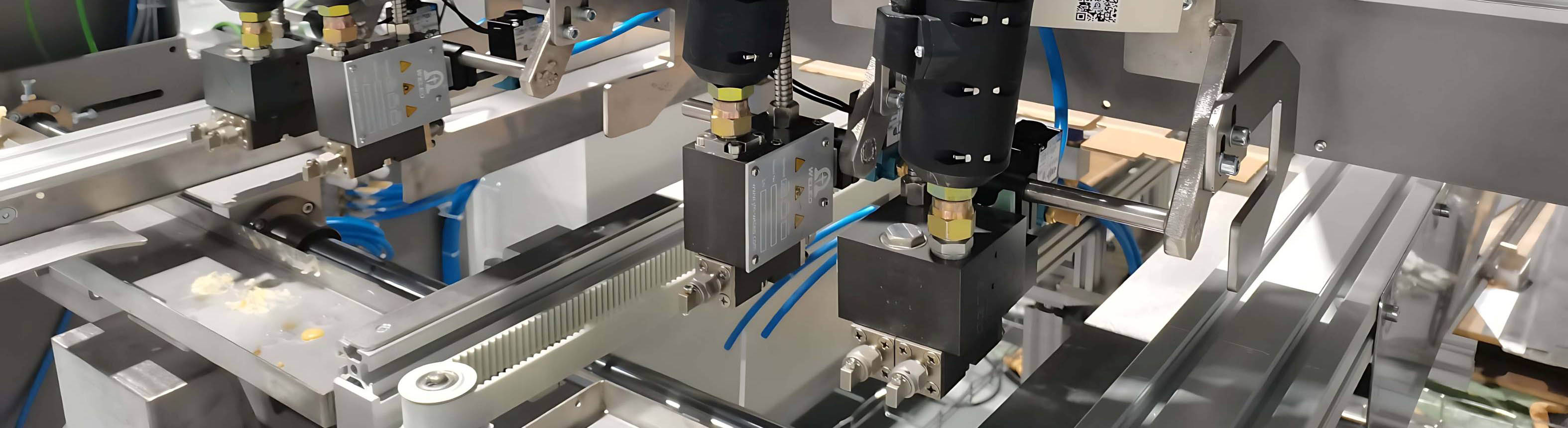
How To Choose A Hot Melt Adhesive System for Industrial Production?
Stable production depends on more than adhesive quality. The hot melt adhesive system must match the glue type, production speed, application method, and working environment. When the system is too small, glue supply becomes unstable. When the system is too complex, maintenance cost increases. A suitable system helps factories keep bonding quality consistent while reducing glue waste and machine stoppage.
For industrial glue application equipment, buyers usually care about output stability, temperature control, pump type, hose quantity, nozzle configuration, and integration with automatic lines. WELEO provides hot melt systems for packaging, labeling, coating, mattress, hygiene products, filter assembly, woodworking, and other production scenarios where stable adhesive delivery is required.
Table of Contents
- Start From The Adhesive Type
- Match The Pump With Production Demand
- Check Tank Capacity And Melting Speed
- Temperature Control Decides Long-Term Stability
- Consider Hose And Gun Configuration Early
- Integration With Automatic Production Lines
- Maintenance Access Should Not Be Ignored
- WELEO System Selection Support
Start From The Adhesive Type
Different adhesives need different melting and delivery conditions. EVA hot melt adhesive is widely used in packaging and assembly because it melts quickly and sets fast. PUR adhesive needs a more sealed system because it reacts with moisture. Pressure-sensitive adhesive may require stable low-temperature control and clean delivery.
Before selecting a hot melt adhesive system, the factory should confirm adhesive form, viscosity, softening point, working temperature, open time, and curing behavior. These details decide tank design, pump power, hose heating, filter structure, and nozzle type.
Match The Pump With Production Demand
Pump selection affects glue output directly. Piston pump systems are often suitable for general industrial bonding and intermittent glue supply. They provide strong pressure and are practical for carton sealing, tray forming, simple lines, and many standard glue points.
Gear pump systems are better for applications that require more stable flow control. When the production line needs controlled coating thickness, accurate glue volume, or continuous output, a precision gear pump system can support better repeatability.
| Production Need | Suggested System Direction | Main Value |
|---|---|---|
| General packaging | Piston pump hot melt system | Stable pressure and practical cost |
| Fine glue control | Gear pump hot melt system | More accurate glue output |
| Reactive adhesive | PUR hot melt system | Better sealing and moisture control |
| Wide-area spraying | Metered spray system | Controlled spray coverage |
| Paper packaging glue | Cold glue system | Lower heating requirement |
Check Tank Capacity And Melting Speed
Tank capacity should not be selected only by machine size. A larger tank is not always better. If glue stays heated for too long, carbonization risk increases. If the tank is too small, the system may not supply enough adhesive during continuous production.
The correct choice should be based on hourly glue consumption, line speed, shift length, and production pause frequency. For a hot melt system for production, melting speed and stable feeding are more important than simply increasing tank volume.
WELEO can help calculate suitable capacity according to glue consumption and application method, reducing the risk of oversizing or undersizing.
Temperature Control Decides Long-Term Stability
Hot melt adhesive is sensitive to temperature. When the tank is too hot, glue may age or char. When the hose is too cool, flow becomes unstable. When the nozzle temperature changes, glue pattern may shift.
A reliable system should provide independent temperature control for tank, hose, and applicator. It should also include over-temperature protection and standby mode. For high-speed production, stable temperature helps keep adhesive viscosity consistent and reduces pressure fluctuation.
Consider Hose And Gun Configuration Early
Many factories only count the number of glue points at the end of the project, but hose and gun quantity should be planned before ordering. The number of hoses affects heating load, control zones, pump output, installation layout, and spare parts planning.
For example, a packaging line may require two or four guns. A mattress spray line may need wider spray heads. A coating line may require a slot die or special applicator. These details decide whether the system can support future production changes.
Integration With Automatic Production Lines
Modern adhesive equipment often needs to connect with PLC systems, sensors, encoders, or host machines. The glue system may need start-stop signals, temperature-ready feedback, alarm output, and trigger control.
For automatic lines, the glue application position must match product movement. If the signal response is slow, glue may be applied in the wrong position. A suitable hot melt adhesive system should be selected with automation control in mind, not added later as an afterthought.
Maintenance Access Should Not Be Ignored
A system that is difficult to clean will increase downtime. Filters, nozzles, pumps, hoses, and seals should be easy to inspect. Maintenance space around the machine should also be considered during layout planning.
Good equipment design helps operators clean filters, replace nozzles, check pump pressure, and inspect heating zones faster. Over time, this reduces service cost and keeps production more stable.
WELEO System Selection Support
WELEO does not recommend one fixed machine for all applications. Our team reviews adhesive type, line speed, output volume, application pattern, control method, and installation space before suggesting a configuration. This helps customers select a hot melt adhesive system that fits real production instead of only matching a product name.
A better selection process reduces glue waste, bonding defects, emergency maintenance, and future modification cost. Send your glue type, production speed, application drawing, and required glue pattern to WELEO, and our team can help plan a practical equipment solution for industrial production.