





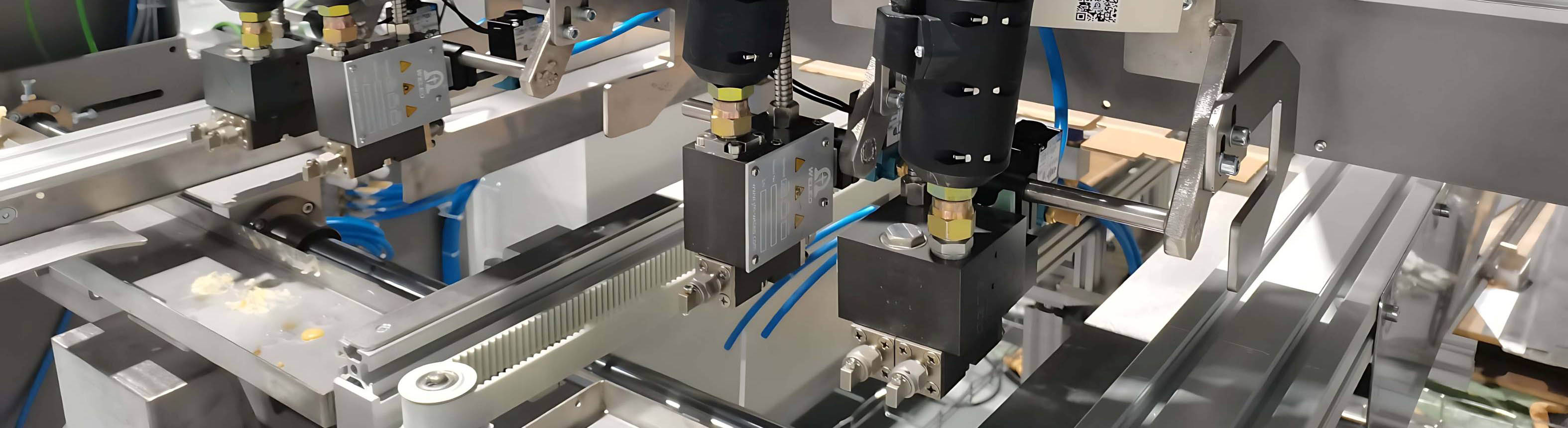
What Is A High Precision Glue Coating System?
A high-precision coating system applies a controlled adhesive weight across a defined width, position, and pattern while keeping variation within an approved tolerance. Precision depends on the complete material path—from adhesive conditioning and metering to applicator geometry, substrate motion, and process verification.
Table of Contents
Precision Begins With a Measurable Target
Terms such as “uniform” or “thin” are not enough for equipment specification. Define coat weight, coating width, edge tolerance, uncoated zones, line speed, start-stop position, and acceptable variation between samples.
Specifications should also state whether accuracy is measured per product, per unit area, across the coating width, or over a defined production period. Each method requires a different sampling plan.
The Metering Unit Controls Quantity
A gear pump driven by a controlled motor or servo creates a predictable relationship between pump rotation and theoretical output. Pump size must cover minimum, normal, and maximum flow without operating continuously near either limit.
The precision glue coating system should adjust delivery when substrate speed changes. Encoder or line-speed signals allow the controller to maintain a defined relationship between pump output and material movement.
The Application Head Controls Distribution
Pump accuracy does not guarantee an even coating. Slot heads, spray modules, bead nozzles, and other applicators distribute adhesive differently. Head width, internal flow path, orifice size, mounting angle, and distance from the substrate affect the final layer.
An adhesive coating application system must match viscosity and required pattern. Excessive pressure may distort spray or increase leakage, while insufficient pressure may produce gaps or poor edge definition.
Stable Adhesive Condition Protects Accuracy
Temperature drift changes viscosity and flow resistance. Heating zones for the melter, hose, dosing module, and applicator should recover during full production demand, not only remain stable while idle.
Sensor calibration, heater response, filter condition, and adhesive residence time should be checked together. Adjusting pump speed cannot reliably correct coating variation caused by unstable material condition.
Include Substrate Motion
Web tension, conveyor vibration, robot speed, product height, and sensor position affect placement. industrial coating system accuracy depends on repeatable machine motion as well as fluid control.
Verify Performance Across the Operating Window
Test low, normal, and maximum speed after warm-up. Repeat measurements following refill, planned downtime, and extended running. Samples should be collected from several points across the coating width when cross-web uniformity matters.
| Verification item | Measurement purpose |
|---|---|
| Total deposited weight | Confirms average output |
| Repeated sample variation | Shows dosing consistency |
| Coating width | Confirms distribution |
| Left, center, and right samples | Reveals cross-web variation |
| Start and stop position | Checks trigger response |
| Pressure and temperature trends | Identifies process drift |
Build Control Around Production Evidence
high precision glue coating requires protected recipes, calibrated pump settings, temperature limits, line-speed compensation, and documented maintenance. An adhesive coating control system should also report low material, temperature deviation, drive faults, and abnormal pressure.
WELEO combines precision gear dosing, heated delivery paths, application modules, pattern control, and automation signals according to adhesive and substrate data. Validating coat weight, pattern geometry, speed response, and bond results creates reliable coating performance that can be reproduced across production shifts.