





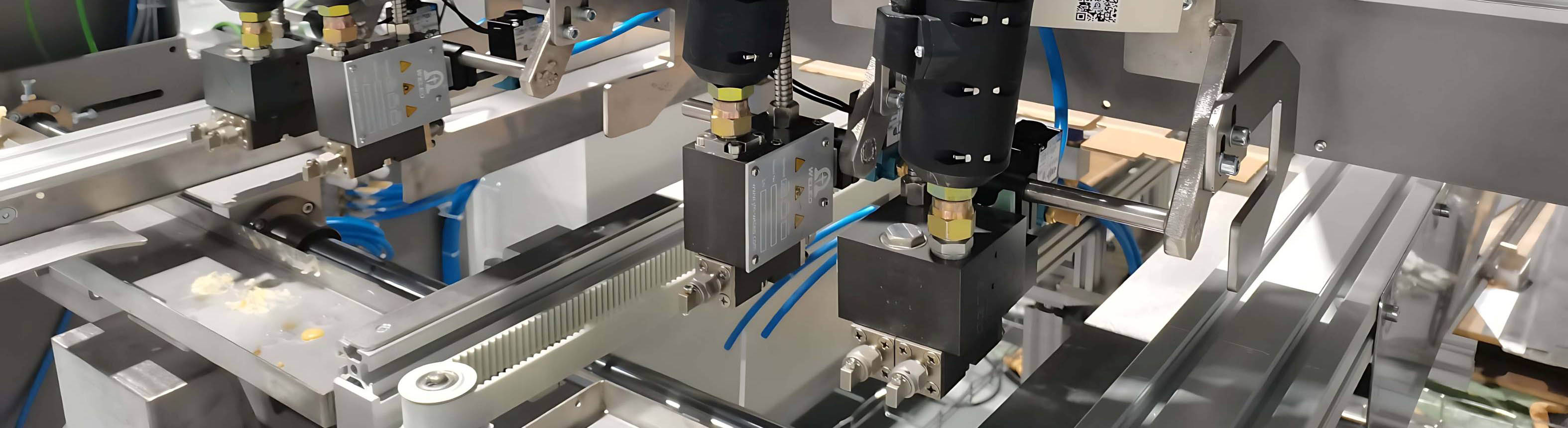
How To Solve Glue Overflow Problems?
Glue overflow usually starts as a small edge problem, but it can quickly become a production cost issue. Overflow stains products, blocks machine parts, increases cleaning time, wastes adhesive, and may cause bonding defects after packaging or assembly. For factories using hot melt, PUR, or cold glue systems, solving overflow requires more than lowering glue volume. The root cause may come from pressure, viscosity, temperature, nozzle size, substrate movement, or poor timing control.
Table of Contents
- Why Glue Overflow Happens On Production Lines
- Start With Temperature And Viscosity
- Control Pressure Instead Of Chasing Glue Volume
- Select The Correct Nozzle And Pattern
- Check Timing With The Main Machine Signal
- Avoid Overflow Caused By Substrate And Compression
- How WELEO Helps Reduce Glue Overflow
- Better Control Before The Next Production Run
Why Glue Overflow Happens On Production Lines
Glue overflow occurs when more adhesive reaches the bonding area than the material can absorb, hold, or cover. In automated production, the problem often appears during high-speed running because the glue has less time to spread naturally.
Common causes include:
Excessive pump pressure
Oversized nozzle diameter
Too long valve opening time
Low adhesive viscosity caused by overheating
Poor substrate positioning
Compression force after bonding
Wrong glue pattern for the product structure
Delayed closing response of the applicator
A reliable adhesive overflow control system should check all these factors together. Adjusting only one parameter may hide the problem for a short time, but overflow may return when line speed, room temperature, or adhesive batch changes.
Start With Temperature And Viscosity
Hot melt adhesive becomes thinner as temperature rises. When temperature is too high, the glue may flow too easily and spread beyond the required bonding area. When temperature is too low, operators may increase pressure to push the glue out, which can also create sudden overflow once the adhesive starts flowing.
Industry viscosity testing methods for hot melt adhesives commonly measure material behavior at controlled temperatures. This shows why temperature stability is not just a heating issue; it directly affects dispensing accuracy.
For glue overflow prevention solution planning, the first step is to confirm:
| Check Point | What To Review | Possible Correction |
|---|---|---|
| Tank temperature | Is the adhesive overheated? | Lower to recommended range |
| Hose temperature | Is heat uneven during transfer? | Balance hose and tank setting |
| Nozzle temperature | Is glue too thin at the outlet? | Adjust applicator zone |
| Viscosity | Is the adhesive suitable for line speed? | Test another grade if needed |
Temperature should be adjusted carefully. Large changes may cause new defects such as stringing, weak wetting, or poor bonding strength.
Control Pressure Instead Of Chasing Glue Volume
Overflow is often treated as a glue amount problem, but pressure stability is equally important. When pressure fluctuates, the first glue output after each signal may be too strong. This creates a heavy glue head, edge spreading, or splashing.
A good glue application control method uses stable pump output and suitable pressure relief design. Gear pump systems are often used where accurate metering is required. Piston pump systems may be suitable for other operating conditions, but pressure pulsation needs to be managed according to the application.
Operators should avoid solving overflow only by reducing adhesive volume on the controller. If pressure remains unstable, the line may still produce heavy spots and light spots. The correct approach is to stabilize delivery first, then fine-tune the application amount.
Select The Correct Nozzle And Pattern
Nozzle selection has a direct effect on overflow. A bead that is too wide may spread after compression. A spray pattern that is too dense may wet too much surface. A dot pattern that is too large may squeeze out after pressing.
For cartons, a straight bead may be enough. For non-woven materials, spray or multi-line patterns may be more suitable. For precision assembly, dot or narrow bead application may reduce excess adhesive.
When selecting a nozzle, buyers should consider:
Glue viscosity
Product surface width
Bonding pressure
Line speed
Required bonding strength
Cleaning frequency
Application distance
The nozzle should match the adhesive and substrate together. A small nozzle may improve control but clog more easily. A larger nozzle may reduce clogging but increase overflow risk. The best choice depends on actual production testing.
Check Timing With The Main Machine Signal
Many overflow problems are not caused by glue amount. They are caused by timing. If the valve opens too early, glue lands before the correct position. If it closes too late, glue extends beyond the bonding area. On a high-speed line, even a short signal delay can shift the glue pattern.
The control system should connect with sensors, encoders, or PLC signals from the main machine. This allows glue application to follow product movement accurately.
Dispensing accuracy issue checks should include:
Sensor position
Trigger delay
Valve response time
Product feeding stability
Conveyor vibration
Air pressure to pneumatic parts
Repeatability at different speeds
When timing becomes stable, operators can reduce glue amount without risking missed bonding.
Avoid Overflow Caused By Substrate And Compression
Some overflow is created after the glue has already been applied correctly. When two surfaces are pressed together, the adhesive spreads. If the bonding gap is too small or the compression force is too high, glue may squeeze out from the edge.
This is common in packaging, bookbinding, furniture parts, and product assembly. The solution may require adjusting the glue line position, reducing bead height, changing adhesive viscosity, or modifying pressing pressure.
For porous materials, part of the adhesive may absorb into the surface. For smooth films or coated boards, adhesive remains on the surface longer, increasing overflow risk. The same glue setting may perform differently on different materials.
How WELEO Helps Reduce Glue Overflow
WELEO provides Hot Melt Adhesive Supply Units, pur reactive hot melt systems, cold glue dispensing systems, Heated Hoses, applicators, nozzles, and filter components. These equipment categories are important because overflow control depends on the full delivery path.
A suitable system can help maintain stable heating, pressure, filtration, and application timing. Clean filters reduce particles that disturb flow. Proper heated hoses help prevent viscosity changes during transfer. Matched nozzles help control glue width and placement.
For production teams, the goal is not only to remove visible overflow. The deeper goal is to build a repeatable process where glue amount, position, and bonding result remain stable during continuous operation.
Better Control Before The Next Production Run
Before changing equipment settings, record the current temperature, pressure, nozzle type, adhesive grade, line speed, and overflow position. This makes troubleshooting easier and prevents random adjustment.
A practical test should reduce one variable at a time. Adjust temperature first, then pressure, then timing, then nozzle pattern. After each change, check bonding strength and product appearance together.
Glue overflow can be controlled when the system is treated as one connected process. With stable heating, accurate pressure, suitable nozzles, and reliable control signals, factories can reduce adhesive waste, improve product cleanliness, and keep automated lines running with fewer interruptions.