





How To Improve Adhesive Application Repeatability?
Repeatable adhesive application means the glue amount, glue position, pattern shape, bonding result, and machine response stay stable from the first product to the last product in the batch. For packaging, labels, paper products, non-woven materials, furniture, electronics, and automated assembly lines, unstable glue output can cause waste, rework, weak bonding, dirty appearance, and unplanned stoppage.
WELEO provides Hot Melt Adhesive Supply Units, PUR reactive hot melt adhesive equipment, cold gluing systems, high-precision gear pump systems, piston pump systems, quantitative spraying systems, Heated Hoses, applicators, nozzles, and automatic filling systems. This product range helps manufacturers build an adhesive repeatability control system around real production speed, adhesive viscosity, application pattern, and accuracy demand. WELEO lists its equipment applications across beverage packaging, food packaging, paper products, atomizer assembly, new energy, non-woven fabrics, labels, and automation industries.
Table of Contents
Key Factors Behind Repeatable Adhesive Application
| Control Area | Repeatability Risk | Practical Improvement |
|---|---|---|
| Temperature | Viscosity changes during running | Keep tank, hose, gun, and nozzle heat stable |
| Pump output | Glue amount changes by cycle | Match pump type with viscosity and line speed |
| Nozzle condition | Pattern becomes uneven | Clean tips and check blockage before production |
| Trigger timing | Glue position shifts | Synchronize sensor, valve, and product movement |
| Filter condition | Flow pressure becomes unstable | Replace filters before output drops |
| Material surface | Bonding result varies | Keep substrate clean, flat, and suitable for bonding |
1. Control Viscosity Before Controlling Output
Keep The Full Heating Path Stable
Hot melt adhesive repeatability starts with viscosity. When viscosity changes, the same pump setting may produce different glue output. ASTM D3236 covers apparent viscosity testing for hot melt adhesives and coating materials up to 200,000 mPa·s at temperatures up to 175°C, showing how closely adhesive flow is linked with temperature control.
The tank setting alone is not enough. Adhesive moves through the pump, heated hose, applicator body, and nozzle before reaching the product. If one section loses heat, the glue can thicken and delay output. If one section overheats, the adhesive may age faster and create carbon buildup. Stable temperature across the full path is the first step toward repeatable application.
2. Use The Right Pump For Output Stability
WELEO explains that glue amount accuracy should be controlled from the equipment source, including piston pump units, high-precision gear pump units, quantitative spraying systems, PUR reactive hot melt equipment, and cold gluing systems. This is important because repeatability depends on whether the system can deliver the same adhesive volume under the same production condition.
Match Pump Structure With Production Needs
For continuous coating or high-speed application, a gear pump can support smoother metering and more stable flow. For standard packaging or general bonding, a piston pump can provide practical pressure and output capacity. The right choice depends on adhesive type, target glue amount, line speed, hose length, nozzle pattern, and required bonding accuracy.
A strong industrial glue consistency system should not rely on manual adjustment during production. It should keep output stable through proper pump sizing, pressure control, filtration, and machine calibration.
3. Improve Nozzle And Applicator Repeatability
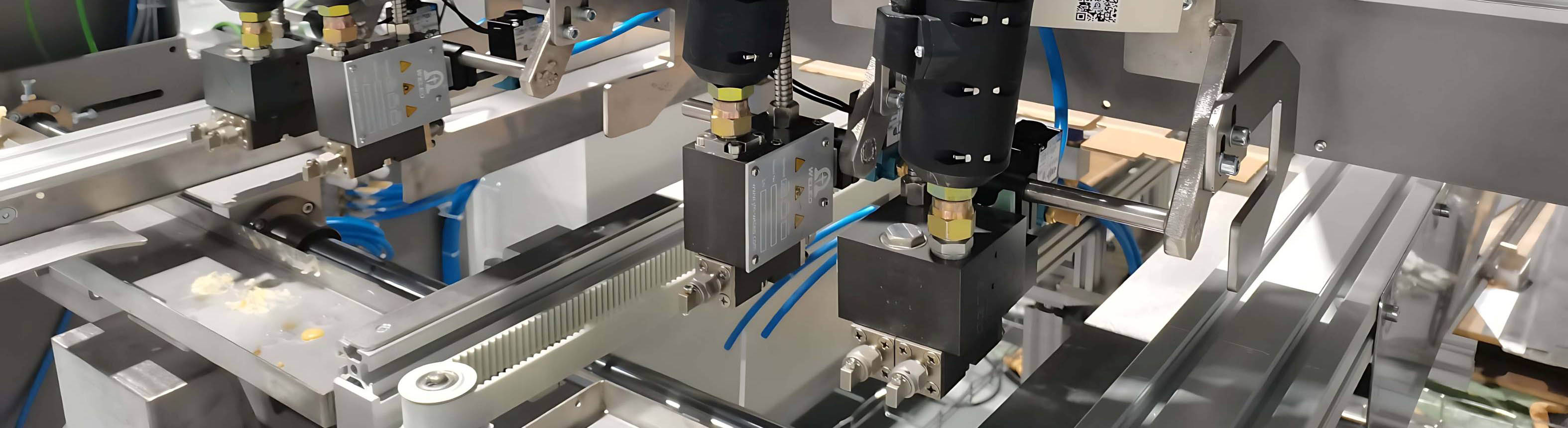
Even with stable adhesive supply, the final result can still vary if the nozzle or applicator is not suitable. A worn nozzle may create a wider glue line. A partially blocked nozzle may create gaps. A slow valve may shift the start and stop points of the glue pattern.
To support precision application control, operators should check bead shape, spray width, glue cutoff, and nozzle cleanliness before mass production. WELEO’s explanation of glue dispensing describes adhesive preparation, delivery, metering, and application as one continuous controlled process, which means each stage affects the final bonding result.
4. Standardize Calibration And Shift Checks
Turn Experience Into Measurable Settings
To improve glue application repeatability, production teams need clear settings instead of relying only on operator experience. Useful checks include tank temperature, hose temperature, pump speed, pressure value, glue output weight, nozzle pattern, trigger delay, and bonding position.
WELEO notes that metering accuracy keeps output proportional to demand, while calibration helps confirm that commanded values match actual delivery. Applicator response is also important because valves and nozzles must open and close consistently for clean cutoff and uniform patterns.
5. Maintain The System Before Output Drifts
Repeatability often becomes worse gradually. Filters collect impurities, nozzles accumulate residue, seals wear, hoses lose heat, and sensors shift. These small changes may not stop the line immediately, but they can slowly change glue amount and bonding appearance.
A practical maintenance plan should include filter replacement, tank cleaning, nozzle inspection, hose temperature testing, pump sound checking, and pressure monitoring. For PUR reactive hot melt systems, sealed feeding and controlled melting are especially important because unwanted moisture exposure can affect adhesive behavior before application.
Conclusion
Adhesive application repeatability improves when temperature, viscosity, pump output, nozzle condition, trigger timing, calibration, and maintenance are managed as one complete process. WELEO supports manufacturers with hot melt adhesive systems, PUR reactive equipment, cold gluing systems, gear pump solutions, piston pump solutions, heated hoses, applicators, and nozzles that help production lines achieve consistent adhesive performance with less waste and fewer quality fluctuations.