





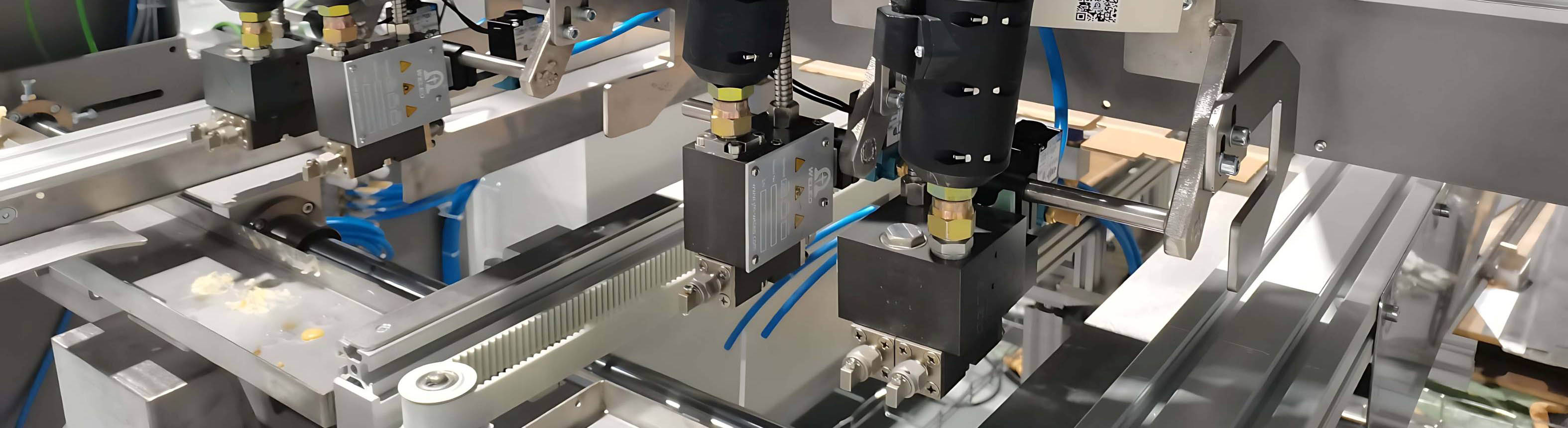
How To Optimize Adhesive Application Efficiency?
Stable adhesive application efficiency comes from more than machine speed. It depends on heating control, glue amount accuracy, nozzle matching, line synchronization, material condition, and maintenance planning. When these factors work together, the production line can reduce glue waste, avoid repeated adjustment, improve bonding consistency, and keep output more predictable.
WELEO provides Hot Melt Adhesive Supply Units, PUR Reactive Hot Melt Adhesive Units, cold gluing pump dispensing systems, Heated Hoses, hot melt guns, nozzle applications, filter cartridges, and automatic hot melt adhesive filling systems. These product categories allow manufacturers to build an adhesive efficiency optimization system around real production needs instead of relying on one standard equipment setup.
Table of Contents
1. Control Temperature Across The Full Glue Path
Hot melt adhesive must reach a stable liquid state before it can be applied smoothly. WELEO explains that a hot melt system normally includes a melting unit, pump and delivery system, heated hoses, applicator, and nozzle. Each section affects the final glue line.
When only the tank temperature is stable but the hose or nozzle temperature fluctuates, viscosity changes before application. This may cause stringing, uneven glue lines, delayed output, or weak bonding. Better efficiency starts with full-path temperature control from the tank to the final nozzle.
2. Match Pump Output With Real Production Speed
Glue amount should follow production speed accurately. Too much adhesive increases material cost and may slow down cooling. Too little adhesive causes weak bonding, rework, and product rejection. WELEO notes that glue amount accuracy should be controlled from the equipment source, including piston pump units, gear pump units, quantitative spraying systems, PUR reactive systems, and cold gluing systems.
This is where industrial glue process improvement becomes practical. The goal is not simply to reduce glue usage, but to apply the right amount in the right position at the right time.
| Efficiency Factor | Common Problem | Optimization Method |
|---|---|---|
| Temperature control | Viscosity fluctuation | Use stable heating from tank to nozzle |
| Pump selection | Unstable glue volume | Match pump type with line demand |
| Nozzle design | Irregular glue shape | Select bead, spray, or slot coating properly |
| Line speed | Glue position shift | Synchronize signal timing and output |
| Maintenance | Blockage or pressure loss | Clean filters, hoses, and nozzles regularly |
3. Choose The Right Nozzle And Application Pattern
Nozzle selection directly affects adhesive usage. A wrong nozzle may apply too wide, too narrow, too thick, or too scattered a glue pattern. In high-speed packaging, labeling, non-woven, paper product, or assembly lines, even small pattern errors can create large waste over long production runs.
WELEO’s product range includes Hot Melt Gun Applications, packaging nozzle applications, non-woven nozzle applications, and heated hose solutions. This makes it easier to match the application pattern with the product structure, glue type, bonding area, and required output.
4. Reduce Adhesive Waste Through Process Control
WELEO reports that optimized hot melt systems can reduce adhesive consumption by 10 to 20 percent, while another WELEO industry article states that inefficient adhesive application can raise material usage by 12 to 25 percent in high-speed lines. These figures show why adhesive control has a direct impact on production cost.
A strong production efficiency solution should review glue temperature, pump pressure, nozzle condition, trigger timing, substrate quality, and compression time together. Changing only one parameter often creates a temporary result rather than stable efficiency.
5. Keep The System Clean And Easy To Maintain
Blocked filters, dirty nozzles, degraded adhesive, and poor hose routing reduce flow stability. WELEO explains that inconsistent adhesive flow can be improved through advanced temperature control and optimized system design, including reduced flow resistance and fewer dead zones where adhesive can degrade.
To improve glue application efficiency, operators should check glue level, tank cleanliness, filter pressure, pump sound, hose temperature, nozzle condition, and signal response before production starts. These checks are simple, but they help prevent small problems from becoming line stoppage.
6. Select Equipment Around The Whole Process
Different applications require different equipment configurations. WELEO explains that hot melt systems can be manual, semi-automatic, or fully automatic depending on production scale, consistency requirements, and line speed. Fully automatic systems support higher efficiency and precision in high-speed manufacturing.
For PUR reactive adhesive, cold glue, packaging glue, non-woven glue, or assembly bonding, the correct system should be selected according to adhesive type, viscosity, glue amount, open time, bonding pattern, material surface, and automation interface. This helps manufacturers optimize adhesive process without creating new instability in the line.
Conclusion
Adhesive application efficiency improves when the whole system is controlled together: heating, pumping, hose delivery, nozzle output, signal timing, material condition, and maintenance. WELEO supports this approach with hot melt adhesive systems, PUR reactive equipment, cold gluing systems, heated hoses, applicators, nozzles, and filling solutions. With the right configuration, manufacturers can reduce waste, improve bonding consistency, and keep production lines running with better stability.