





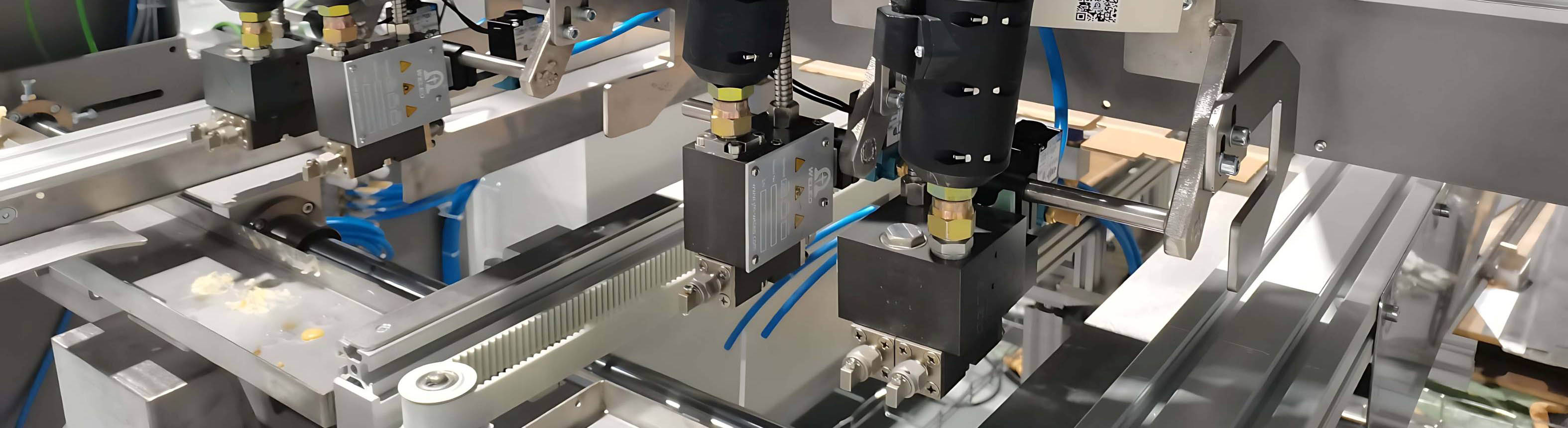
How to Ensure Consistent Glue Output?
Consistent glue delivery is the backbone of repeatable quality. When output drifts, defects appear as weak seals, messy edges, or variable coating weight. The challenge is not a single setting but the coordination of heat, pressure, metering, and timing. Building a consistent glue output system requires aligning these variables so that every cycle behaves the same, regardless of speed or shift.
Industry data from 2024 indicates that lines with stabilized adhesive parameters reduced variation in coating weight by more than 20 percent and cut rework significantly. This shows that consistency is achievable when the process is engineered as a whole rather than tuned in isolation.
Table of Contents
What “consistent output” really means
Consistency is more than a fixed setpoint. It includes:
Stable flow rate at the applicator
Repeatable shot size or bead width
Uniform response during speed changes
Predictable behavior at startup and shutdown
If any of these elements vary, output appears inconsistent even when the machine settings look unchanged.
The four control pillars
Temperature discipline
Viscosity shifts with temperature. Even small deviations can change flow behavior and bead geometry. Keep tank, hose, and head within a tight band to support reliable adhesive flow control. Multi-zone heating with accurate sensors helps prevent hot spots and cold zones.
Pressure stability
Fluctuating supply pressure creates pulsation and irregular delivery. Use regulated supply and damping where needed. A stable pressure baseline allows the metering section to do its job without compensating for upstream noise.
Metering accuracy
The metering element defines how much adhesive moves per unit time. A well-matched precision pump control system keeps output proportional to demand and stable across speed changes. Calibration ensures that commanded values equal actual delivery.
Applicator response
Valves and nozzles must open and close consistently. Wear, contamination, or delayed actuation can distort timing and volume. Fast, repeatable response is essential for clean cutoff and uniform patterns.
Common sources of variation
| Symptom | Likely Cause | Effect |
|---|---|---|
| Bead width changes with speed | Poor synchronization | Visible inconsistency |
| Heavy glue at startup | Thermal overshoot | Scrap at line start |
| Intermittent gaps | Pressure dips or air entrainment | Weak bonding areas |
| Stringing at cutoff | Valve delay or excess heat | Dirty finish |
Identifying these patterns helps pinpoint which pillar needs correction.
Practical methods to stabilize output
Synchronize with line speed
Link pump speed and valve timing to conveyor speed. Closed-loop control maintains proportional output during acceleration and deceleration.
Calibrate regularly
Set a routine to verify actual output against target values. Small drift in sensors or pumps accumulates over time and should be corrected before it becomes visible.
Eliminate dead zones
Design flow paths to avoid areas where adhesive can stagnate. Stagnation leads to degradation and intermittent release, which disrupts uniform delivery.
Standardize start and stop routines
Controlled ramp-up and purge steps reduce early-cycle variation. This is critical to maintain consistent glue output across shifts.
Keep the system clean
Filtration and scheduled cleaning prevent particles from affecting valves and nozzles. Clean hardware supports predictable flow and timing.
Monitoring for long-term control
Consistency improves when performance is measured continuously. Track:
Flow rate deviation
Temperature variance across zones
Pressure stability at the pump outlet
Defect rate linked to bonding
These indicators provide early warning before variation becomes a quality issue. With proper monitoring, glue dispensing stability control becomes proactive rather than reactive.
WELEO’s approach to stable output
WELEO designs systems that prioritize repeatability. Its solutions combine accurate metering, uniform heating, and stable pressure management to keep output aligned with setpoints. Integrated control modules coordinate parameters in real time, reducing the need for manual adjustment and supporting consistent performance across different products and speeds.
Results you can expect
When the system is balanced, production gains are measurable:
Lower adhesive consumption due to precise dosing
Fewer defects from uniform bonding
Reduced downtime from fewer adjustments
Faster changeovers with predictable settings
These improvements accumulate into better efficiency and more reliable output.
Conclusion
Consistent glue output comes from coordinated control of temperature, pressure, metering, and applicator response. By stabilizing these pillars, standardizing procedures, and monitoring key indicators, production lines can achieve repeatable and predictable adhesive delivery. WELEO provides solutions engineered for this level of control, helping manufacturers maintain quality and efficiency at scale.