





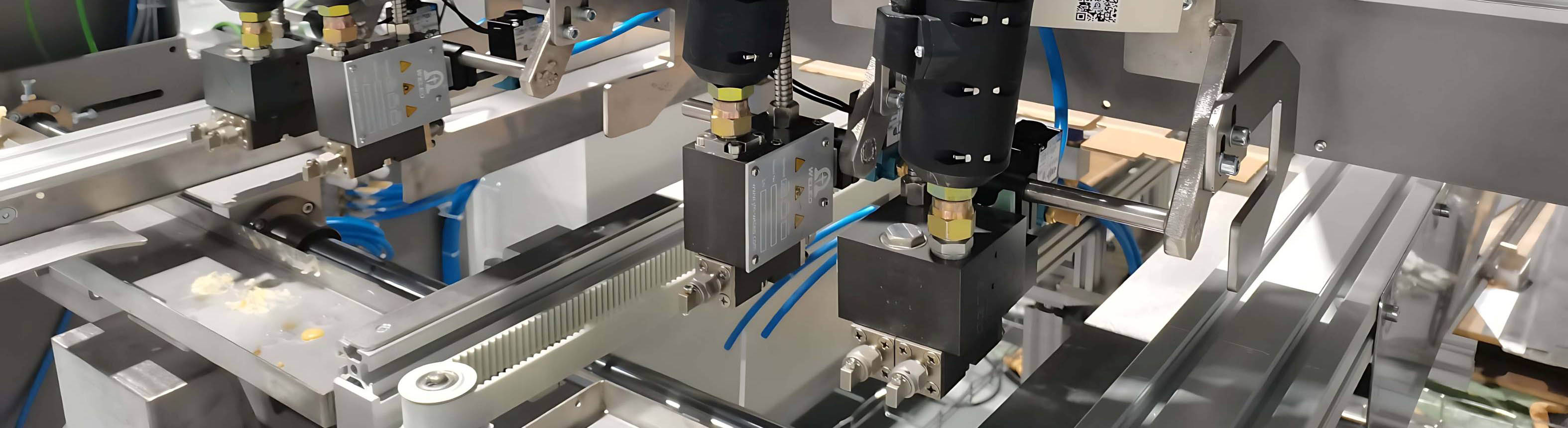
How to Choose Adhesive System for Production Line?
Selecting the right adhesive system is a strategic decision that directly influences product quality, production speed, and long-term operating cost. Many factories focus only on equipment price at the beginning, but later face issues such as unstable bonding, excessive adhesive consumption, or frequent downtime. A structured industrial adhesive system selection approach helps avoid these risks and ensures the system matches real production needs.
Recent industry data shows that companies using properly matched adhesive systems improved line efficiency by up to 18 percent while reducing material waste significantly. This demonstrates that system selection is not just a technical step, but a key factor in overall manufacturing performance.
Table of Contents
- Start from your production requirements
- Evaluate adhesive type and process compatibility
- Match equipment capability with production goals
- Consider automation and integration needs
- Assess maintenance and long-term reliability
- Compare system efficiency and cost impact
- WELEO’s solution for production lines
- Conclusion
Start from your production requirements
Before comparing equipment, it is essential to clearly define production conditions. Different industries and products require different adhesive behaviors.
Consider the following factors:
Material type such as paper, plastic, wood, or metal
Required bonding strength and durability
Production speed and automation level
Environmental conditions such as temperature and humidity
These variables determine whether a hot melt or cold glue solution is more suitable. They also define the level of precision needed in the system.
Evaluate adhesive type and process compatibility
Choosing the correct adhesive is closely linked to system design. Each adhesive type has its own processing characteristics.
Hot melt adhesives offer fast bonding and high efficiency, making them suitable for high-speed lines. Cold glue systems are more cost-effective for porous materials and lower-speed applications. PUR adhesives provide strong and durable bonding for demanding environments.
Making the right hot melt system choice or alternative selection depends on how the adhesive interacts with the product and production conditions.
Match equipment capability with production goals
Equipment must support the required output without creating unnecessary complexity.
Key considerations include:
Flow control precision
Accurate adhesive delivery ensures consistent bonding and reduces waste. Systems with stable flow control maintain performance even under changing production speeds.
Temperature management
For hot melt systems, stable temperature control is critical. Inconsistent heating can lead to viscosity changes and unstable application.
Pressure stability
Uniform pressure ensures smooth adhesive flow and consistent application patterns.
A well-structured glue equipment selection guide should always include these technical parameters rather than focusing only on capacity or size.
Consider automation and integration needs
Modern production lines increasingly rely on automation. Adhesive systems should be able to integrate with existing control systems such as PLC or MES.
Automated systems improve consistency, reduce manual intervention, and allow real-time adjustment of parameters. This is especially important for high-volume production where small variations can lead to significant defects.
Choosing a system that supports automation is a key step when planning to choose adhesive system for factory environments with evolving production demands.
Assess maintenance and long-term reliability
A system that performs well initially but requires frequent maintenance can increase overall cost.
Important factors include:
Ease of cleaning and maintenance
Durability of key components
Availability of technical support
Stability under continuous operation
Industry studies indicate that maintenance-related downtime can account for up to 20 percent of total production interruptions in adhesive systems. Reliable design reduces these risks.
Compare system efficiency and cost impact
Cost evaluation should include more than the purchase price. Total cost of ownership includes adhesive consumption, energy usage, maintenance, and downtime.
| Cost Factor | Impact on Production |
|---|---|
| Adhesive usage | Direct material cost |
| Energy consumption | Operating expense |
| Maintenance frequency | Downtime and labor |
| System efficiency | Overall productivity |
A well-designed system helps reduce waste and improve efficiency, making it the best glue system selection over the long term.
WELEO’s solution for production lines
WELEO provides adhesive systems designed to meet diverse industrial requirements. Its product range includes piston pump units, precision gear pump systems, spraying solutions, PUR equipment, and cold glue systems.
Each solution is engineered to deliver stable flow, consistent temperature control, and reliable operation. The systems are designed for easy integration into automated production lines, supporting flexible configuration and long-term performance.
By focusing on real production challenges, WELEO helps manufacturers achieve efficient and stable adhesive application.
Conclusion
Choosing the right adhesive system requires a comprehensive evaluation of materials, process requirements, equipment capability, and long-term cost. A systematic approach ensures that the selected solution supports both current production needs and future growth.
With proper planning and the right technology, adhesive systems become a stable and efficient part of the production process, improving both quality and operational performance.