





What Is A Modular Adhesive System Design?
Modularity means building an adhesive application system from coordinated functional units that can be configured, replaced, or expanded without redesigning the entire line. The modules may cover adhesive feeding, melting, pumping, heating, dosing, pattern control, hoses, guns, nozzles, sensors, and automation interfaces.
| Module | Primary function | Common configuration choice |
|---|---|---|
| Supply | Holds or feeds adhesive | Tank, cartridge, pail, or drum |
| Conditioning | Prepares material | Heating, agitation, or moisture control |
| Delivery | Moves adhesive | Piston pump or gear pump |
| Dosing | Controls quantity | Motor or servo-driven metering |
| Application | Forms the deposit | Bead, spray, slot, or multi-orifice head |
| Control | Coordinates operation | HMI, recipes, PLC signals, alarms |
Table of Contents
Why Divide the System Into Modules?
Production requirements often change after installation. A new substrate may need another spray pattern, a faster line may require higher dosing capacity, or an extra lane may require independent control. modular adhesive system design makes those changes easier to evaluate because each function has a defined boundary.
Build Around a Stable Core
The core should cover the functions that are unlikely to change, such as adhesive chemistry, normal consumption range, power supply, and main production interface. Variable functions can then be handled through application heads, pump sizes, control channels, or mounting options.
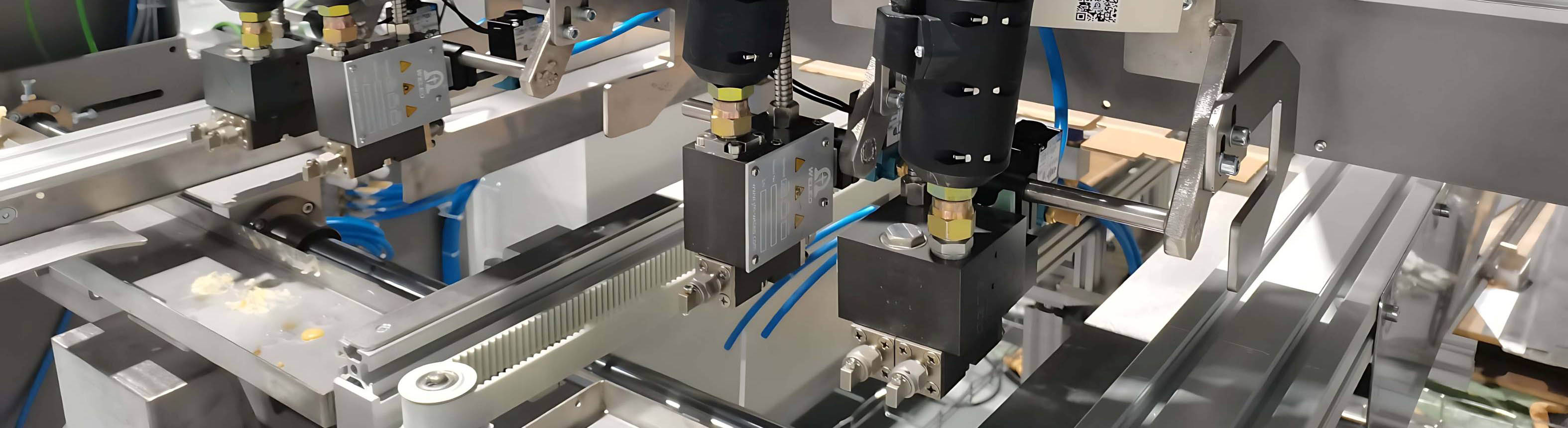
A flexible glue system configuration may allow a dosing platform to operate independently or connect with an existing melter. Multiple pattern modules can be used when one line produces different widths, coating styles, or product formats.
Decide Where Flexibility Creates Value
Key modular glue system advantages include adding applicators, changing pattern modules, separating lanes, expanding recipes, or connecting servo dosing to an existing melter. Each option should solve a likely production change because unnecessary modules add connectors, controls, and spare-part combinations.
Check the Interfaces, Not Only the Components
Mechanical interfaces include thread standards, mounting dimensions, hose routing, and service clearance. Electrical checks cover voltage, heater wattage, sensor type, pin definition, grounding, and motor control. Process interfaces include viscosity range, pressure loss, flow capacity, and temperature limits.
An industrial modular system also needs a defined control architecture. Decide which controller owns temperature, dosing speed, product triggering, recipes, alarms, and line permission. Unclear ownership creates duplicated signals and difficult fault diagnosis.
Plan Expansion Before Installation
Flexible adhesive system design should simplify validation as well as expansion. Each module can have measurable acceptance criteria, such as output range, temperature recovery, trigger response, pattern width, and alarm behavior.
Available electrical load, control ports, heating channels, installation space, and service clearance should be documented. This establishes how many pumps, hoses, guns, or independent lanes the original platform can support without major reconstruction.
WELEO combines melters, servo gear-dosing platforms, cartridge systems, heated paths, application modules, and pattern controls according to the production task. Defining module boundaries early helps create a system that is expandable without sacrificing compatibility, control accuracy, or maintenance access.