





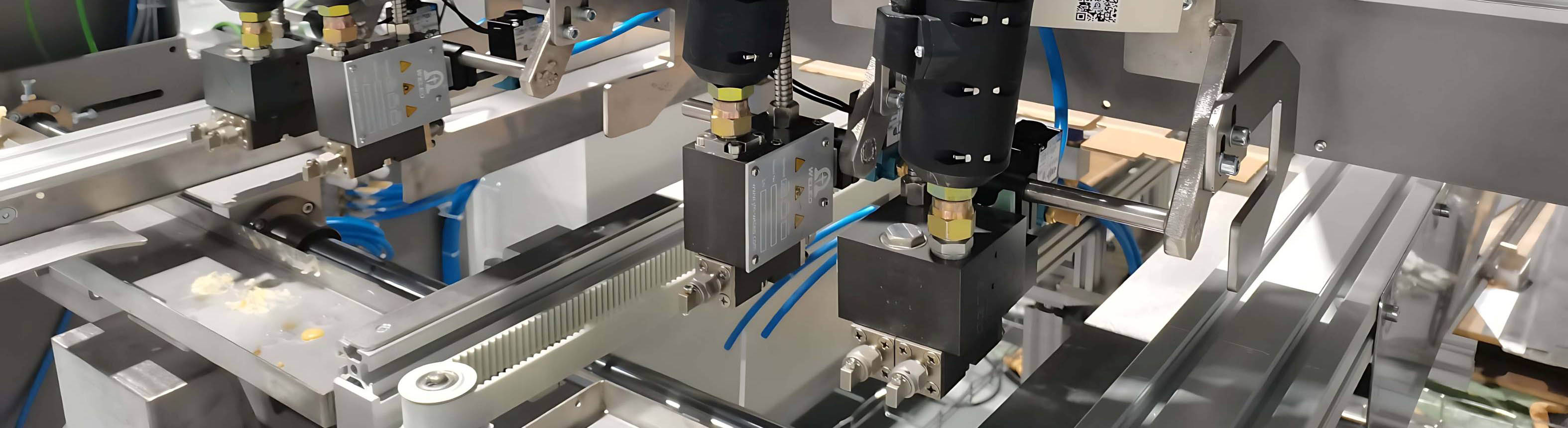
How to Control Adhesive Pressure Precisely?
Precise adhesive pressure control is essential for stable glue amount, clean cut-off, repeatable coating, and long equipment life. Pressure that is too low may create skipped lines, narrow coating, or weak bonding. Pressure that is too high may cause splash, stringing, leakage, excessive glue use, and faster seal wear. A good adhesive pressure control system should not only raise pressure; it should keep pressure stable under real production speed, adhesive viscosity, temperature variation, and nozzle switching.
Table of Contents
Pressure Is Connected to Flow, Not Separate From It
Adhesive pressure is often misunderstood as a single setting on a gauge. In reality, pressure is the result of pump output, adhesive viscosity, hose resistance, filter condition, nozzle size, valve response, and line demand. When viscosity increases because temperature is low, pressure may rise even if the pump setting has not changed. When filters begin to clog, pressure may also rise while actual glue output becomes less stable.
Technical hot melt guidance explains that viscosity affects pumping, spreading, and wetting behavior. This is why pressure control must be linked with temperature control and adhesive condition.
Main Variables in Industrial Glue Pressure Control
| Variable | Effect on Pressure | Control Method |
|---|---|---|
| Pump speed | Directly affects adhesive delivery | Use stable motor control and output testing |
| Adhesive viscosity | Higher viscosity increases resistance | Keep tank, hose, and gun temperature balanced |
| Filter condition | Blockage increases pressure fluctuation | Monitor pressure change before and after filter |
| Hose length | Longer hose increases flow resistance | Avoid unnecessary hose length and sharp bending |
| Nozzle diameter | Smaller outlet increases pressure demand | Match nozzle size with glue pattern and speed |
| Valve response | Slow response changes glue start and stop | Check pneumatic or electric actuation timing |
For a dispensing pressure control plan, pressure should be measured during production, not only during idle heating. A system can look stable when the line is stopped but fluctuate when the gun opens and closes quickly.
Why Small Pressure Changes Become Big Defects
High-speed production magnifies small pressure and timing errors. At 100 m/min, the substrate moves about 1.67 meters per second. A 5 millisecond delay equals about 8.3 mm of movement. If pressure takes too long to recover after each shot, glue start points, bead thickness, and tail length can change across products.
Pressure fluctuation also affects adhesive consumption. If operators increase pressure to avoid missed glue, the line may apply more adhesive than required. Even a small over-application can become costly when multiplied by thousands or millions of products per month.
Practical Glue Pressure Adjustment Method
A reliable glue pressure adjustment method should follow a step-by-step process:
Confirm adhesive working temperature from the adhesive data sheet and production trial.
Check that tank, hose, and gun temperature are stable before pressure adjustment.
Clean or replace filters before increasing pressure.
Measure pump output for a fixed time at the same setting.
Inspect nozzle size, wear, and outlet cleanliness.
Run samples at normal speed and maximum speed.
Record pressure, glue weight, glue position, and bond result together.
ASTM D903 and ASTM D1002 are useful references when pressure settings need to be connected with bond strength, because they provide structured methods for peel and shear comparison.
WELEO’s View on Precise Adhesive Pressure Control
WELEO develops adhesive application systems for hot melt, PUR reactive hot melt, cold glue, packaging, paper products, non-woven materials, labels, automation, and related industrial applications. Precise pressure control starts from the correct system configuration: suitable pump type, stable heating path, proper hose size, clean filtration, matched nozzle, and reliable electrical or pneumatic control.
A strong industrial glue pressure system should also be easy for operators to monitor. Pressure values, temperature values, glue amount checks, and alarm points should be clear. When the system is designed this way, operators can identify whether a problem comes from adhesive condition, filter restriction, nozzle wear, or control timing.
For quotation and technical review, send WELEO your adhesive type, viscosity range, working temperature, glue pattern, nozzle quantity, line speed, required glue amount, and current pressure fluctuation problem. The team can recommend a pressure control and dispensing configuration that supports cleaner application, lower waste, and more repeatable production.