





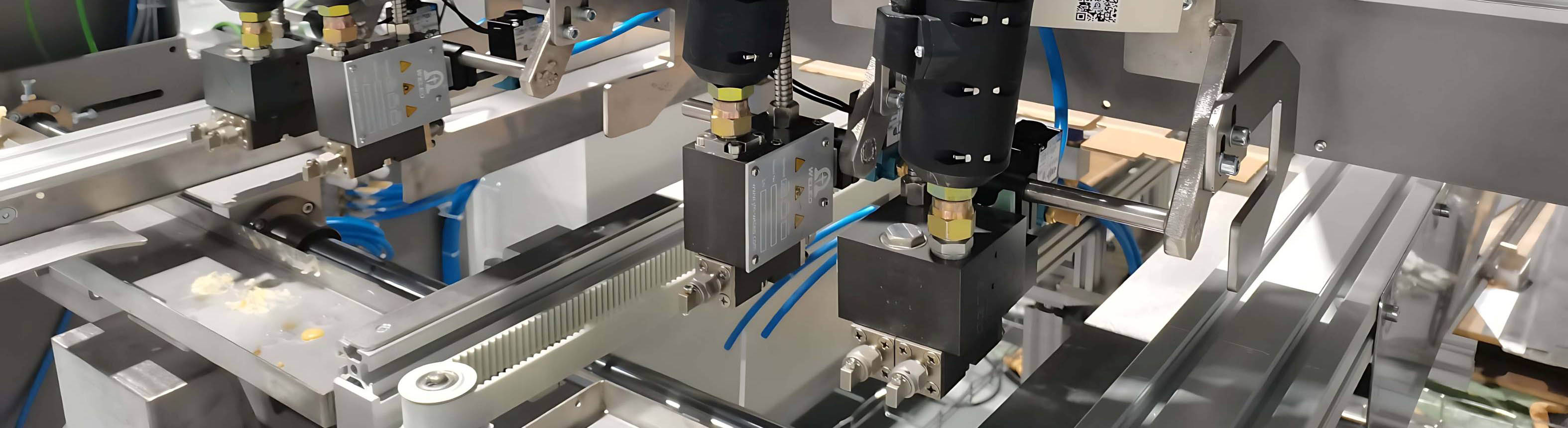
Benefits of High Pressure Electronic Glue Guns
In industrial adhesive applications, high pressure electronic glue guns have become indispensable tools for ensuring accuracy, speed, and durability in production lines. Unlike manual glue guns or traditional pneumatic types, electronic glue guns use digitally controlled heaters and solenoid valves to deliver precise, consistent adhesive output. They are commonly paired with hot melt melters, gear pumps, or piston systems, making them essential for packaging, nonwoven fabrics, woodworking, and automotive assembly.
This article explores how high pressure electronic glue guns work, their structural advantages, and the key benefits they bring to modern manufacturing environments.
Table of Contents
What Is a High Pressure Electronic Glue Gun
A high pressure electronic glue gun is a precision adhesive applicator that uses electrical control and high-pressure delivery to dispense hot melt or reactive adhesives. It operates at pressures up to 60–100 bar, ensuring stable adhesive flow even under demanding production speeds.
| Component | Function |
|---|---|
| Heating Element | Maintains adhesive at constant temperature for smooth flow |
| Solenoid Valve | Electrically controls glue on/off timing |
| Nozzle Assembly | Shapes the glue output pattern (dot, bead, or swirl) |
| Pressure Chamber | Stores adhesive under high pressure for rapid release |
| Electronic Controller | Synchronizes temperature, pressure, and valve timing |
This configuration enables precise adhesive application with quick response time, ideal for high-speed automated production lines.
How It Works
Adhesive Heating and Pressurization The adhesive, supplied from a hot melt melter or tank, enters the glue gun under high pressure. The built-in heaters warm it to the optimal temperature—typically between 120°C and 180°C—ensuring smooth flow and consistent viscosity.
Electronic Valve Control A solenoid valve opens and closes according to digital signals from a PLC or timer. This control determines the glue pattern, duration, and quantity with millisecond precision, minimizing waste and ensuring uniform coverage.
Nozzle Application The pressurized adhesive exits through a precision nozzle. Different nozzles can be fitted to create specific patterns such as dot coating, bead lines, or swirl sprays depending on product design.
Real-Time Monitoring Modern glue guns include temperature sensors and flow controllers that automatically adjust heating and pressure, keeping application consistent even under variable speeds.
Key Benefits of High Pressure Electronic Glue Guns
1. Exceptional Application Precision
The electronic valve mechanism allows for accurate control of glue output, even in high-speed production environments. Manufacturers can achieve perfect dots or lines every cycle, improving the uniformity of adhesive coverage across all products.
2. Rapid Response and High Efficiency
The fast-switching solenoid valve responds within milliseconds, ensuring immediate glue release or cut-off. This precision minimizes overspray, prevents stringing, and reduces material waste, leading to overall higher production efficiency.
3. Strong and Consistent Adhesion
High pressure ensures complete adhesive penetration into porous materials such as cardboard or fabric. The constant pressure flow prevents air pockets and guarantees strong bonding performance for packaging or assembly applications.
4. Easy Integration with Automation Systems
Electronic glue guns can be directly connected to PLC-controlled production lines. Operators can synchronize glue timing with machine motion, sensors, or product position, making them ideal for robotic or automated packaging systems.
5. Safe and Ergonomic Operation
Modern glue guns are designed with heat-insulated housings, anti-drip nozzles, and ergonomic handles for operator safety. Automatic temperature regulation prevents overheating, extending component lifespan and ensuring stable performance.
Applications Across Industries
High pressure electronic glue guns are widely used in diverse manufacturing sectors:
Packaging: Carton sealing, tray forming, and labeling applications that require fast and clean adhesive lines.
Nonwoven Fabrics: Accurate spray patterns for hygiene products such as diapers and sanitary materials.
Automotive Assembly: Controlled bonding of insulation layers, seats, and interior panels.
Woodworking: Efficient application for edge banding and furniture assembly.
Electronics: Micro-bead gluing for circuit modules and precision parts.
Their flexibility allows manufacturers to handle different adhesives, including EVA, PO, APAO, and PUR hot melts.
Comparison with Pneumatic Glue Guns
| Feature | Electronic Glue Gun | Pneumatic Glue Gun |
|---|---|---|
| Control Method | Electric solenoid valve | Air pressure trigger |
| Response Speed | Fast (milliseconds) | Moderate |
| Temperature Control | Digital and automatic | Manual adjustment |
| Precision | High | Medium |
| Maintenance | Low | Requires regular air Filter cleaning |
| Ideal For | Automated production | Manual or low-speed tasks |
This comparison shows how electronic glue guns outperform pneumatic ones in precision, response, and reliability, especially in automated systems.
Maintenance and Longevity
High pressure electronic glue guns require minimal maintenance. Regular cleaning of nozzles and filters prevents clogging, while periodic calibration of temperature sensors ensures accurate adhesive control. Because electronic systems reduce mechanical wear, their service life is often twice as long as conventional air-driven guns.
Conclusion
A high pressure electronic glue gun represents a perfect balance of precision, speed, and durability for industrial adhesive application. Its combination of electronic control and consistent pressure delivery allows manufacturers to achieve cleaner, faster, and more efficient bonding results across multiple industries.
For advanced adhesive application systems and precision glue guns, Weleo provides reliable, high-performance solutions designed to meet the demands of modern packaging, nonwoven, and automation production lines.