





What Is The Difference Between Gear Pump and Piston Pump?
Glue pump selection affects adhesive output stability, application accuracy, maintenance rhythm, and long-term production cost. Many adhesive systems look similar from the outside, but the pump structure inside can create very different results. For hot melt adhesive, PUR reactive adhesive, cold glue, packaging lines, paper product bonding, Non-woven Applications, and automated assembly, understanding gear pump vs piston pump helps manufacturers choose a system that fits real production conditions.
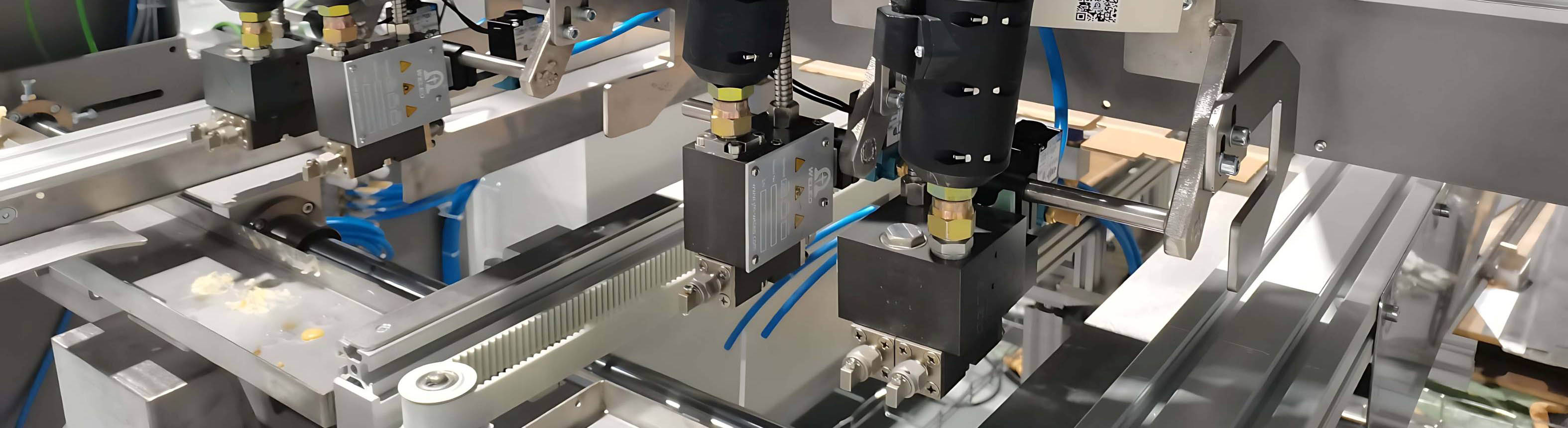
WELEO provides Hot Melt Adhesive Supply Units, PUR reactive hot melt adhesive systems, piston pump series, high-precision gear pump series, quantitative spraying systems, cold gluing systems, Heated Hoses, applicators, nozzles, and automatic filling systems. This allows equipment selection to be matched with adhesive viscosity, line speed, glue amount, coating pattern, and accuracy demand, rather than choosing one pump structure for every process.
Table of Contents
How A Gear Pump Works
A gear pump uses rotating gears to move adhesive through a fixed cavity. As the gears rotate, adhesive is carried from the inlet side to the outlet side with a continuous delivery action. Because the output is linked closely to motor speed and gear displacement, gear pumps are often used when stable metering is important.
For adhesive systems, this structure is useful in continuous coating, high-speed packaging, label bonding, non-woven applications, and processes that require repeatable glue amount control. A gear pump can support smoother flow and better output consistency when the adhesive is properly melted and filtered.
Why Gear Pumps Fit Precision Applications
Gear pumps are commonly selected for higher control accuracy because they can deliver adhesive in a more continuous flow. This helps reduce glue line fluctuation, uneven coating thickness, and repeated manual adjustment. In a precision production line, stable flow is often more valuable than simple high pressure.
ASTM D3236 describes the measurement of apparent viscosity for hot melt adhesives and coating materials, covering materials up to 200,000 mPa·s at temperatures up to 175°C. This shows why temperature and viscosity must be controlled before the pump can perform accurately. A precise pump cannot solve unstable adhesive behavior caused by poor heating control.
How A Piston Pump Works
A piston pump uses reciprocating movement to push adhesive forward. During operation, the piston moves back and forth to create suction and discharge. This structure is strong, simple, and suitable for many general adhesive supply conditions, especially where the process needs reliable pressure delivery rather than extremely fine metering.
Piston pump systems are often used in packaging, carton sealing, assembly bonding, and general hot melt adhesive applications. They can handle many standard production needs and usually provide strong output capacity. However, because the motion is reciprocating, flow pulsation may be more noticeable unless the system is designed with proper pressure control.
Why Piston Pumps Fit General Production
A piston pump can be a practical choice when glue output demand is moderate, the bonding pattern does not require extremely strict thickness control, and the production line needs a durable adhesive supply unit. For many factories, piston pump equipment offers a strong balance between cost, output, and maintenance convenience.
Hydraulic Institute pump engineering references classify both gear pumps and piston pumps as positive displacement pumps, but their flow behavior is different. Gear pumps create flow through rotary movement, while piston pumps create flow through reciprocating displacement. This structural difference explains why their adhesive delivery performance is not the same.
Pump Structure And Application Comparison
| Comparison Item | Gear Pump | Piston Pump |
|---|---|---|
| Flow behavior | More continuous and stable | Strong output with possible pulsation |
| Output control | Easier to link with motor speed | Depends more on stroke and pressure control |
| Precision level | Suitable for accurate metering | Suitable for general adhesive supply |
| Common use | Coating, spraying, high-speed lines | Packaging, assembly, standard bonding |
| Maintenance focus | Gear wear, filtration, temperature stability | Seals, piston movement, pressure stability |
| Selection logic | Better for repeatable glue amount control | Better for practical output and durability |
What Should Be Considered Before Selection?
A good adhesive pump comparison system should not only compare pump names. It should evaluate adhesive type, viscosity, working temperature, glue amount per cycle, line speed, nozzle pattern, hose length, and required bonding appearance. A low-viscosity glue and a high-viscosity PUR adhesive do not behave the same way under pressure, so the pump must match the material.
For a continuous coating process, a gear pump may provide better control. For a standard packaging line that needs stable pressure and reliable supply, a piston pump may be enough. For high-speed automated equipment, pump response, flow stability, and control accuracy become more important.
Maintenance Also Affects Pump Performance
The difference gear piston pump users often notice after installation is not only output style, but also maintenance behavior. Gear pumps need clean adhesive and good filtration, because particles or carbon buildup can affect gear accuracy. Piston pumps require attention to seals, pressure fluctuation, and reciprocating wear. In both cases, poor filtration, overheated adhesive, blocked nozzles, and unstable temperature can reduce service life.
WELEO’s adhesive equipment approach focuses on matching pump type with the whole system, including melting unit, hose, applicator, nozzle, filter, and control method. This helps reduce unstable output and supports easier process adjustment.
Which Is The Best Adhesive Pump Type?
There is no single best adhesive pump type for every production line. Gear pumps are stronger for metering accuracy, stable output, and high-precision adhesive application. Piston pumps are practical for many standard glue supply needs, especially where durability and output capacity matter more than very fine volume control.
To make the right glue pump selection, manufacturers should begin with the production target: stable coating thickness, lower glue waste, faster line speed, easier operation, or stronger pressure supply. WELEO can configure piston pump systems, high-precision gear pump systems, PUR reactive hot melt units, cold gluing systems, hoses, guns, and nozzles according to the adhesive and process requirements.
Conclusion
Gear pumps and piston pumps are both useful in adhesive systems, but they solve different production problems. Gear pumps provide smoother flow and stronger metering control, while piston pumps offer reliable pressure delivery for many standard applications. Better pump selection should be based on adhesive behavior, production speed, accuracy demand, maintenance conditions, and the complete glue application process. WELEO supports this selection with adhesive equipment solutions that help manufacturers build more stable, accurate, and efficient production lines.