





What Is a PUR Reactive Hot Melt Adhesive Unit?
In the field of advanced adhesive technology, PUR Reactive Hot Melt Adhesive Units represent one of the most innovative systems for bonding applications. Unlike traditional Hot Melt systems, PUR (Polyurethane Reactive) adhesives combine thermal and chemical curing, creating stronger, more durable bonds that withstand temperature changes, moisture, and mechanical stress.
This article explains what a PUR reactive Hot Melt adhesive unit is, how it works, and why it has become essential in modern packaging, woodworking, and electronic assembly industries.
Table of Contents
What Is PUR Reactive Hot Melt Adhesive
PUR Hot Melt adhesive (Polyurethane Reactive Hot Melt) is a type of moisture-curing adhesive that melts at high temperature and reacts chemically after application. Once it cools down, the adhesive continues to cure by absorbing moisture from the air or substrate surface, forming a crosslinked polyurethane network.
This two-step process gives PUR adhesives superior bonding strength, heat resistance, and elasticity, making them suitable for demanding production environments.
| Property | Description |
|---|---|
| Main Ingredient | Polyurethane prepolymer |
| Curing Type | Thermal + Moisture Reactive |
| Viscosity | Medium to high |
| Typical Use | Woodworking, packaging, automotive, electronics |
| Resistance | High against heat, cold, and chemicals |
Structure of a PUR Reactive Hot Melt Unit
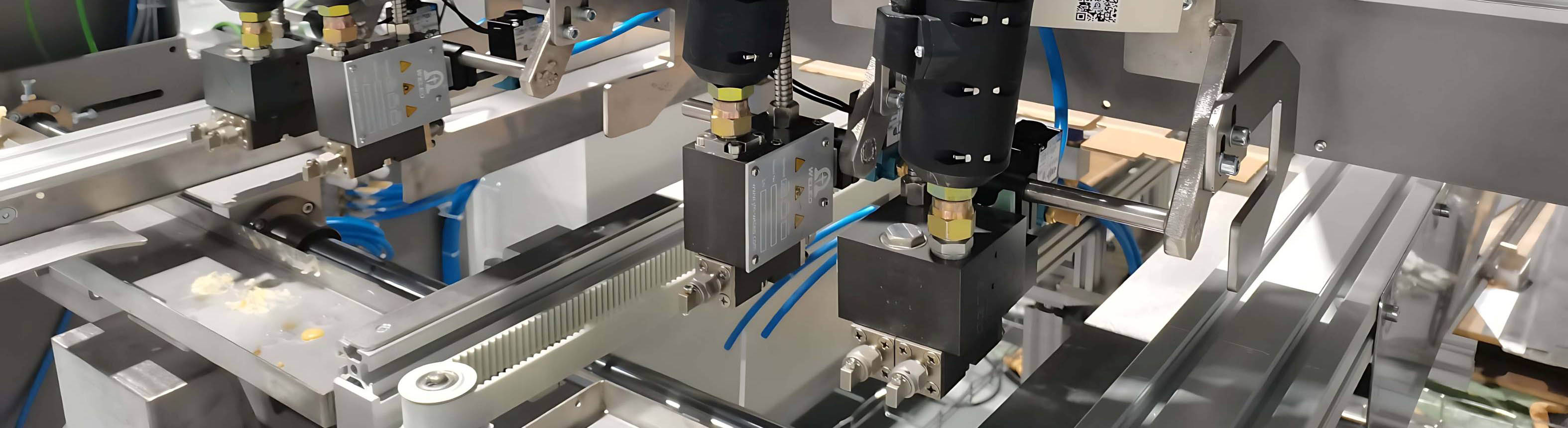
A PUR reactive Hot Melt adhesive unit is specially designed to handle the unique characteristics of PUR adhesives. Since PUR reacts with moisture, the equipment must be airtight and temperature-controlled to prevent premature curing.
The main components include:
Sealed Melting System – The adhesive is heated in a closed tank or drum melter to avoid contact with air.
Precision Gear or Piston Pump – Delivers melted PUR at stable pressure and flow rate.
Heated Hoses and Applicators – Maintain temperature throughout the transfer line.
Temperature and Pressure Controller – Ensures consistent operation under changing conditions.
Air Isolation or Nitrogen Protection – Prevents moisture contamination during storage and use.
These systems can be configured for block PUR, granule PUR, or 200L drum-type PUR adhesives depending on production scale.
Key Advantages of PUR Reactive Hot Melt Units
1. Superior Bond Strength and Durability
PUR adhesives form chemical bonds with the substrate surface, resulting in stronger adhesion than conventional EVA Hot Melts. The cured layer resists heat, cold, and solvents, making it ideal for applications that require long-term stability.
2. Resistance to Moisture and Temperature
Once cured, PUR adhesive films maintain their strength under extreme temperature fluctuations (-40°C to +120°C) and high humidity environments. This property makes them ideal for outdoor packaging, automotive interiors, and furniture manufacturing.
3. Clean and Efficient Application
The closed-melting system prevents oxidation, carbonization, and waste accumulation in the tank. Operators experience less adhesive degradation and consistent output quality even during long production shifts.
4. Compatibility with Automation Systems
Modern PUR units integrate with robotic applicators and automated lines, providing precise temperature control, digital monitoring, and programmable glue patterns. This makes them perfect for large-scale manufacturing where uniform coating and reliability are essential.
5. Reduced Maintenance and Material Waste
By maintaining airtight operation and using intelligent heating control, PUR units reduce adhesive exposure to moisture, minimizing clogging and maintenance downtime.
Applications of PUR Reactive Hot Melt Systems
PUR reactive Hot Melt adhesive units are now common across multiple industries that demand high-performance bonding:
Woodworking and Furniture Assembly: Ideal for edge banding, panel lamination, and veneer bonding.
Electronics and New Energy: Used for circuit encapsulation, display modules, and battery assembly.
Packaging and Printing: Ensures tight seals and durable bonding in temperature-sensitive products.
Textiles and Automotive Interiors: Provides strong adhesion without compromising flexibility.
Construction Materials: Suitable for insulation panels, floor laminates, and decorative surfaces.
Each application benefits from the adhesive’s chemical curing and long-term resistance to stress, making PUR systems one of the most versatile adhesive technologies available today.
Operational Considerations
When using PUR reactive Hot Melt units, manufacturers should note the following:
Store PUR adhesives in moisture-proof containers.
Operate at controlled temperatures between 100–130°C depending on formulation.
Use nitrogen blanketing or sealed tanks to avoid premature curing.
Regularly clean Nozzles and hoses using PUR-safe cleaning agents.
Following these practices ensures consistent adhesive performance and extends equipment life.
Conclusion
A PUR reactive Hot Melt adhesive unit represents the next generation of adhesive application technology. With its ability to produce chemical-strength bonds, maintain stability under extreme conditions, and integrate seamlessly into automated production lines, it has become a preferred choice for manufacturers seeking precision and reliability.
For advanced PUR Hot Melt systems designed for packaging, furniture, and automation industries, Weleo provides customized, high-efficiency solutions that deliver long-lasting performance and outstanding adhesive quality.