





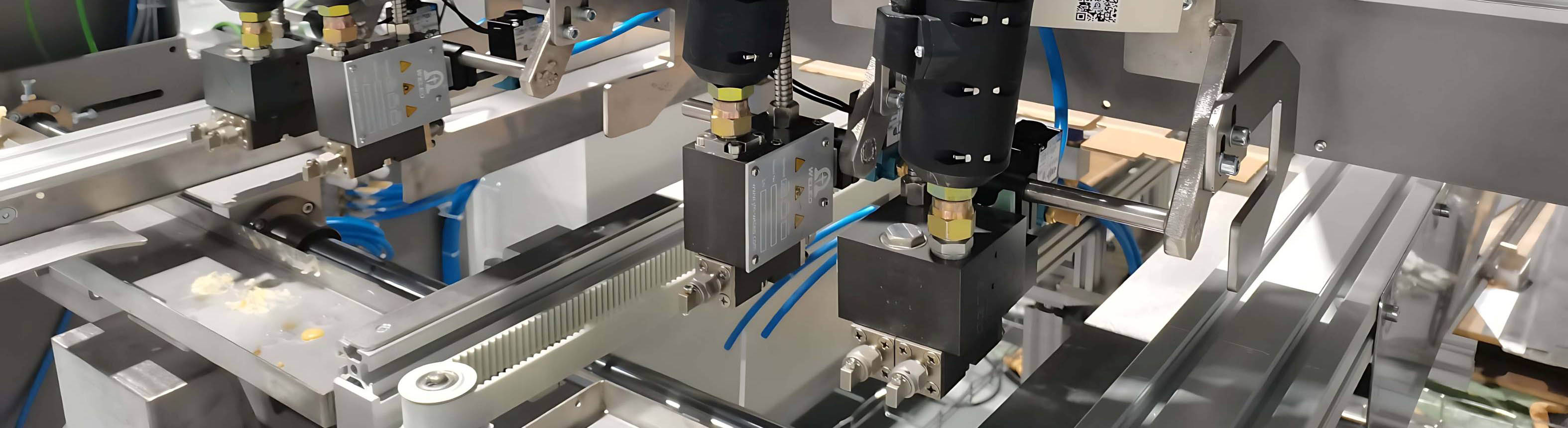
Swirl and Bead Handguns for Flexible Adhesive Patterns
In industrial adhesive applications, versatility and precision are crucial. Swirl and bead handguns are two of the most commonly used hot melt adhesive tools, designed to deliver flexible and efficient glue application across different materials and patterns. From packaging and labeling to nonwoven, woodworking, and automotive assembly, these handguns help manufacturers achieve clean, accurate, and durable bonding results.
This article explains how swirl and bead handguns work, their structural differences, advantages, and the best ways to apply them in modern production lines.
Table of Contents
Understanding Swirl and Bead Handguns
Both swirl and bead handguns are handheld or automated tools connected to a hot melt melter or pump system. They are engineered to dispense adhesive under controlled temperature and pressure, but they differ in their application pattern and use case.
| Type | Adhesive Pattern | Typical Application |
|---|---|---|
| Swirl Handgun | Spiral or circular spray pattern | Nonwoven fabrics, large area coverage |
| Bead Handgun | Continuous linear bead | Packaging, edge gluing, assembly bonding |
Each type can be used manually or integrated into robotic systems, offering flexibility for both high-volume and custom production environments.
How Swirl Handguns Work
A swirl handgun uses compressed air to atomize the adhesive and form a spiral pattern. Inside the Nozzle, air mixes with hot adhesive, causing it to swirl outward as a fine, circular spray.
Adhesive Delivery The hot melt adhesive flows from a heated Hose into the gun at pressures typically ranging from 30 to 60 bar.
Air Control System A pneumatic valve controls the air flow, shaping the adhesive into a swirling spray pattern that covers a wide surface area evenly.
Temperature Stability The gun’s internal heaters maintain a steady temperature of 150°C–180°C, ensuring consistent viscosity and preventing blockage.
Adjustable Spray Width Operators can fine-tune the air pressure and nozzle size to modify the spray diameter for different substrate sizes or coating requirements.
Advantages of Swirl Handguns
Wide Coverage: Ideal for nonwoven materials and textile bonding.
Soft Adhesive Distribution: Provides breathable and flexible bonding layers.
Reduced Material Waste: Sprays only the required amount of adhesive with minimal overspray.
Smooth Integration: Compatible with automated lines or robotic arms for precise pattern control.
How Bead Handguns Work
A bead handgun delivers adhesive in a continuous line, suitable for sealing, edge gluing, or structural bonding. It operates by controlling adhesive flow through a precision valve, producing a steady and uniform bead.
Continuous Flow Delivery The adhesive is pressurized by a gear or piston pump, ensuring a stable, pulseless flow.
Nozzle Configuration The nozzle diameter determines bead width, which can range from 0.3 mm to 3 mm depending on the product.
Trigger or Electronic Control Operators can manually trigger the gun or synchronize it with a PLC signal for automatic application.
High-Speed Consistency The precise valve mechanism allows clean start and stop cycles, eliminating stringing or dripping.
Advantages of Bead Handguns
Strong and Continuous Bonds: Ensures uniform adhesion along the length of the substrate.
High Accuracy: Perfect for packaging, assembly, and product sealing.
Compact Design: Lightweight and easy to maneuver for manual operators.
Easy Maintenance: Simple structure allows fast nozzle cleaning and replacement.
Comparison Between Swirl and Bead Handguns
| Feature | Swirl Handgun | Bead Handgun |
|---|---|---|
| Pattern Type | Spiral / circular | Continuous line |
| Coverage Area | Wide | Narrow |
| Adhesive Use | Lower consumption | Moderate consumption |
| Application Type | Surface coating | Structural bonding |
| Ideal For | Nonwoven fabrics, flexible materials | Packaging, edge sealing, assembly |
| Air Requirement | Compressed air | Not required |
The choice between swirl and bead handguns depends on the required adhesive pattern, coverage area, and bonding strength.
Industrial Applications
Swirl and bead handguns are integral to many manufacturing processes:
Packaging Industry: Bead guns ensure precise box and carton sealing, while swirl guns apply coating for labeling or tray wrapping.
Nonwoven Fabrics: Swirl guns deliver uniform bonding for hygiene and filtration materials.
Automotive: Bead guns provide continuous adhesion for trims, foam, and insulation layers.
Woodworking: Bead guns ensure clean edge bonding and furniture assembly.
Textile and Composite Industries: Swirl guns apply flexible bonding without hardening the fabric surface.
Their adaptability allows manufacturers to switch between spot, line, or wide-area bonding with minimal setup time.
Maintenance and Operation Tips
To maintain reliable operation and extend equipment life:
Keep the adhesive within its recommended temperature range.
Clean nozzle openings regularly to prevent residue buildup.
Inspect air pressure regulators for leaks or instability.
Use compatible adhesives (EVA, PUR, or PO) suited to your specific gun type.
Store guns in dry, dust-free environments when not in use.
Proper maintenance ensures long-term stability, consistent performance, and minimal downtime.
Why Flexibility Matters in Adhesive Application
Modern production lines require versatile tools that can adapt to different product designs and adhesive types. Swirl and bead handguns meet these needs by allowing manufacturers to switch between precision lines and wide-area coatings quickly, improving productivity and reducing material costs.
Their precision, combined with robust mechanical design, supports both manual craftsmanship and fully automated systems, making them indispensable for global manufacturing operations.
Conclusion
Swirl and bead handguns provide the perfect combination of flexibility, precision, and reliability in adhesive application. Whether producing wide, soft coatings for nonwoven fabrics or strong continuous lines for packaging, these tools ensure clean, efficient, and consistent performance.