





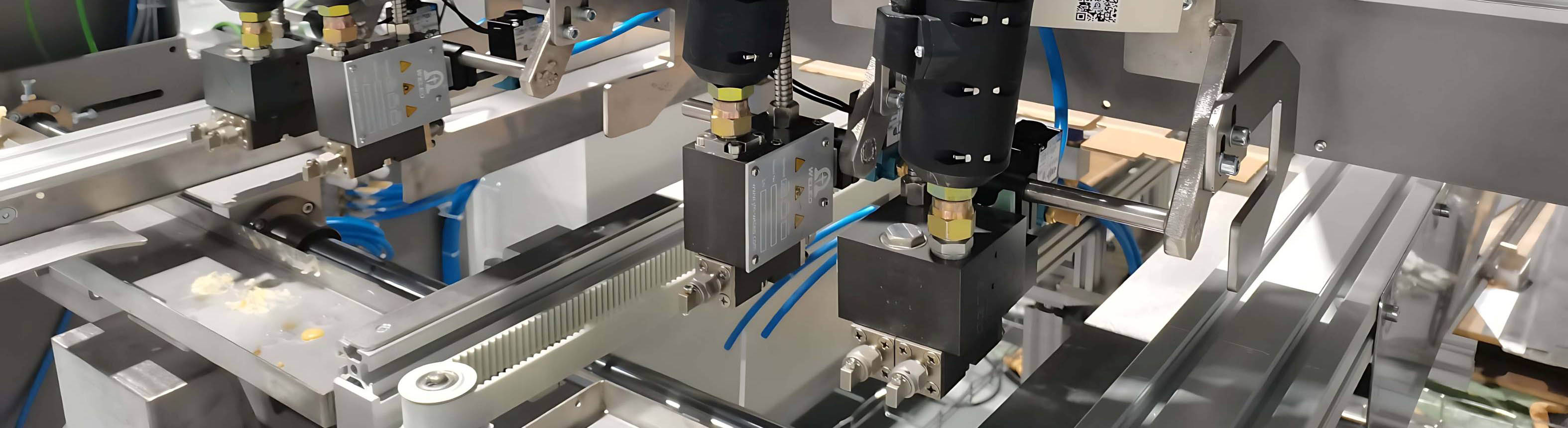
Why Hotmelt Gun Filters Matter for Clean Application?
In hot melt adhesive systems, even the smallest impurity can cause serious production problems. Hotmelt gun Filters are designed to prevent contamination, ensuring that the adhesive flows smoothly through Hoses and Nozzles. They play an essential role in maintaining consistent adhesive quality, preventing clogging, and extending equipment lifespan.
This article explains how hotmelt gun filters work, their main types, and why they are critical for achieving clean, stable adhesive application in industrial production.
Table of Contents
What Is a Hotmelt Gun Filter
A hotmelt gun filter is a fine mesh or metal screen located inside the adhesive gun or hose connector. Its function is to trap solid impurities, charred adhesive particles, or debris that may form during the melting or pumping process. By filtering these contaminants, it ensures that only clean, uniform adhesive reaches the nozzle.
| Component | Function |
|---|---|
| Filter Screen | Captures solid particles or carbon residues |
| Filter Holder | Secures filter in position within the gun |
| Heating Block Interface | Keeps filter at constant temperature to prevent solidification |
| Flow Path Channel | Guides clean adhesive toward the nozzle outlet |
Filters are typically made from stainless steel mesh or sintered metal, providing durability and high heat resistance up to 250°C.
How Hotmelt Gun Filters Work
Adhesive Flow and Filtration As the molten adhesive flows from the hose into the gun, it passes through the filter. The fine mesh traps contaminants larger than the filter’s rated micron size (commonly 100–200 µm).
Temperature Regulation The filter is installed in a heated area to maintain consistent temperature, ensuring that the adhesive doesn’t cool or harden during filtration.
Clean Delivery to Nozzle Only clean, particle-free adhesive reaches the nozzle tip, guaranteeing smooth application and preventing spray distortion or clogging.
Maintenance and Replacement Over time, the filter collects debris and must be cleaned or replaced to maintain proper flow and pressure. Regular inspection prevents sudden pressure drops and uneven adhesive output.
Key Advantages of Hotmelt Gun Filters
1. Prevents Clogging and Downtime
By capturing impurities before they reach the nozzle, filters prevent clogging that could stop production. This results in fewer maintenance interruptions, smoother operations, and higher productivity.
2. Ensures Clean and Uniform Application
A filter maintains consistent adhesive flow, ensuring every bead or spray pattern is clean and uniform. This is especially critical in high-precision applications like packaging seals, nonwoven fabrics, and electronic bonding.
3. Extends Equipment Lifespan
Filters protect downstream components—including hoses, valves, and nozzles—from contamination. This reduces wear and extends the life of expensive parts, lowering long-term maintenance costs.
4. Improves Adhesive Quality
Hot melt adhesives can degrade over time, forming carbonized particles or gels. Filters remove these residues, preserving adhesive purity and bonding strength.
5. Enhances Safety and Efficiency
A clogged nozzle can cause pressure buildup and sudden release of hot adhesive, posing safety risks. Filtration stabilizes pressure and prevents unpredictable surges, making production safer and more efficient.
Applications Across Industries
Hotmelt gun filters are widely used wherever hot melt adhesives are applied under pressure and heat, including:
Packaging: Ensures clean glue lines for carton sealing and tray forming.
Nonwoven Fabrics: Maintains consistent adhesive patterns for hygiene products.
Woodworking: Prevents debris from affecting lamination quality.
Automotive: Keeps PUR and polyolefin adhesives clean during interior bonding.
Electronics: Provides stable micro-bead application in assembly processes.
Whether in continuous coating or intermittent gluing, filtration ensures uniform adhesive performance across every application.
Choosing the Right Filter
The correct filter type depends on adhesive characteristics, equipment design, and production speed. Consider these factors when selecting a filter:
Micron Rating: Choose appropriate mesh size (80–200 µm) based on adhesive purity and nozzle diameter.
Material: Stainless steel or sintered metal filters are ideal for high-temperature operation.
Pressure Resistance: Ensure filters can withstand system pressure without deformation.
Cleaning Method: Select filters that are easy to remove and clean without damaging the mesh.
Choosing the right filter balance prevents over-restriction while ensuring effective contaminant removal.
Maintenance Tips for Optimal Performance
Replace filters regularly according to production hours or adhesive type.
Clean with appropriate solvents compatible with the adhesive.
Avoid mechanical scraping that can damage the mesh.
Check for discoloration or residue buildup after every production shift.
Monitor system pressure; sudden drops may indicate filter blockage.
Consistent maintenance ensures stable pressure, smooth flow, and reliable adhesive performance.
Why Filters Are Crucial for Automation
In automated gluing lines, precision and uptime are everything. Even minor adhesive contamination can disrupt robotic spray accuracy or PLC-controlled flow patterns. By ensuring clean adhesive delivery, filters help automation systems maintain consistent cycle performance without error signals or downtime.
Clean filtration also supports advanced vision inspection systems, ensuring each adhesive pattern is applied exactly as programmed.
Conclusion
A hotmelt gun filter is a small but vital component in every adhesive application system. It guarantees clean, stable, and safe adhesive delivery, ensuring consistent quality across high-speed production lines. By preventing clogging, protecting nozzles, and extending equipment life, filters directly contribute to improved productivity and reduced operating costs.
For advanced adhesive application systems and durable filtration solutions, Weleo offers high-performance hotmelt gun filters and complete glue application systems engineered for reliability, precision, and clean operation in industrial environments.